Showing posts with label mining. Show all posts

Saturday, August 2, 2014

Australia Scraps Carbon Tax

Australia, the twelfth largest economy in the world, has voted to repeal a costly and contentious carbon tax in a 39-32 vote in Australia's senate last month.

The former Labor government, while introducing a price on carbon, said the move would help slash emissions by 160 million metric tons by 2020. It offered voters billions of dollars in compensation through tax breaks and welfare payments for increased costs stemming from one of the most dramatic reforms ever attempted in the energy-reliant economy.

But after the global financial crisis took hold in 2008, followed by the end of a decadelong mining boom in 2012 that slowed growth and employment in the A$1.5 trillion (US$1.4 trillion) economy, Australian voters turned against climate laws—recognized by the International Energy Agency as model legislation for developed countries—blaming them for rising energy bills and living costs.

The World Bank in May produced a State and Trends of Carbon Pricing report counting carbon pricing programs in 40 nations and 20 regions worth a collective US$30 billion, while also singling out repeal plans in Australia as one of the biggest international threats to the rollout of similar programs elsewhere, given its example.

However, implementation of the carbon tax and other emissions laws proved costly for the then-incumbent Labour Party. Former prime-minister Kevin Rudd was unseated in an internal party challenge from Julia Gillard as his approval ratings plummeted due in part to proposed Resource Profits Super Tax which would've levied a tax of no less than 30% on mining companies should their annual profits pass an annual A$75 million threshold.

As leader of the opposition party, Tony Abbot warned the Australian federal government against spending millions of taxpayer dollars for an ad campaign in support of the Carbon Tax in 2011. During the 2013 elections, Abbot campaigned against Labour's carbon tax scheme, saying it increased energy costs and hurt small businesses.

According to 2011 figures from the US Energy Information Administration, Australia is the world's largest exporter of coal and 4th largest exporter of LNG. The demise of the Resource Profits Super Tax also is likely to increase investment and exploration in the Coober Pedy area of the Australian outback, which is believed to hold as much as 200 billion barrels worth of oil according to multiple reports from last year.

Friday, June 20, 2014

Today's Train of Thought- Getting in the Spirit of Things, June 20, 2014


In honor of the host country for the 2014 World Cup, today's train of thought takes us back to Brazil.

The 905 km EFVM [Empresa Ferroviário Vitoria a Minas or Vitoria-Minas Railroad- NANESB!] is one of a couple of subsidiaries of VALE S.A. that won concessions to operate newly-privatized rail lines in Brazil. Although the line is one of the few that hauls long-distance passenger trains in Brazil along with commodities such as ore, grain, aggregates, pulp, steel and soybeans, what makes the EFVM stand out from heavy-duty railroading in the USA [and other parts of Brazil- NANESB!] is that it's done on narrow gauge. While narrow gauge in the USA and Canada is mostly for preservation and tourists, when your parent company is the third largest mining company in the world, it should probably some as no surprise that heavy hauling is expected.

And that's what the EFVM DD45s have basically been doing since 1970. At the time these narrow-gauge behemoths were built by EMD, they represented the most powerful single-engine locomotive available. With 3600 HP, the units were made to EFVM's unique specifications and followed the same design as the standard gauge EMD SD45 at the time- only the SD45 used two powered three axle trucks. While Union Pacific could boast of larger locomotives such as the DD35, DD35B and DD40AX, those had multiple engines on the same frame, unlike VALE's DDM45. The DDM45s [the 'M' reportedly standing for Meter gauge- NANESB!] entered service in Brazil in 1970 and have been faithfully soldiering on ever since- although new and secondhand locomotives from the USA have been added to both the EFVM fleet and others to help deal with the increasing traffic throughout Brazil.

Here, railpictures.net contributor Nicolas Fagundes caught EFVM DDM45 #877 in VALE colors leading an empty stone train that's snaking its way past a wood pulp train along the shores of Rio Doce- the namesake of one of VALE's predecessors- in Barbados, Espirto Santo in October 2013. The pulp train is likely headed to a yard further down the line along the banks of the river while the #877 is likely going at least as far as the junction town of Colatina, about 12 km further west.

Thursday, May 15, 2014

Officials in Turkey Confirm Hundreds of Miners Killed in Coal Mine Explosion

At least 245 miners in western Turkey were killed when a transformer in a mine shaft exploded during a shift change. The death toll is expected to rise after rescuers have been continually hindered by smoke and fallen debris. It was believed that there were as many as 787 workers underground at the Soma Kömür İşletmeleri A.Ş. mine during the blast.

First responders were able to rescue some 88 workers in the minutes immediately after the blast. However, while some rescuers believe that a number of the estimated 120 miners trapped below the surface could have made it to underground 'safety chambers' carved into the mine shaft and equipped with oxygen masks, hopes for their rescue grow dimmer by the hour. Family members of some of the missing and dead were waiting outside the mine or local hospitals in Soma. Autopsies performed on two of the miners pulled from the Soma mine show that they were killed by carbon monoxide poisoning.

The mine, which was once state-owned, had been recently privatized and the CEO boasted of bringing down costs from $140 to $24 per ton since the facility was run by the state-controlled TKI Coal Mining in a 2012 interview with Turkish newspaper Hürriyet.

However, the repercussions from this disaster could be felt well beyond the western coal-producing city of Soma. As recently as the end of April, opposition members of the Turkish parliament wanted the government to look into working conditions at the mine as the facility was racked by intermittent strikes and labor stoppages during the last two years with workers claiming unsafe working conditions. The motion was blocked by members of Prime Minister Recep Tayyip Erdogan's Justice and Development Party.

Erdogan himself visited Soma on Wednesday and was greeted by jeers and heckling from residents of the mining town. While addressing some of the families of the miners, Erdogan stated that these types of accidents were fairly common- citing a number of 19th century mining disasters in Great Britain in his speech.


Public anger at the Prime Minister only grew further after an image of one of Erdogan's aides kicking a protestor being restrained by Turkish military police in Soma.

After his remarks, relatives of some of the dead and missing miners and angry residents of Soma reportedly forced the Prime Minister and his entourage to seek refuge in a local supermarket. Others reportedly ransacked the local headquarters of Erdogan's Justice and Development party.

Demonstrators also hung banners that read 'MURDERERS' and staged demonstrations in front of government offices in Ankara and Istanbul as police moved in with tear gas and water cannons to break up those protests.

Saturday, October 20, 2012

'Coal Mine' Classification of Rural Virginia Airport Expansion Halts County's Economic Development Plan


An airport expansion in the southwestern tip of Virginia is being held up due to regulatory red tape regarding the local airport authority's plans to partially finance it by unearthing and selling coal from a seam that runs underneath the project.

Although state regulators had signed off of the project a few years ago, the runway expansion was subject to review from Federal regulators from the Office of Surface Mining. The project reached an impasse when regulators in Washington D.C. determined that the Breaks Regional Airport Authority proposal was in fact a coal mine and would be subject to a much lengthier and costlier permitting process.
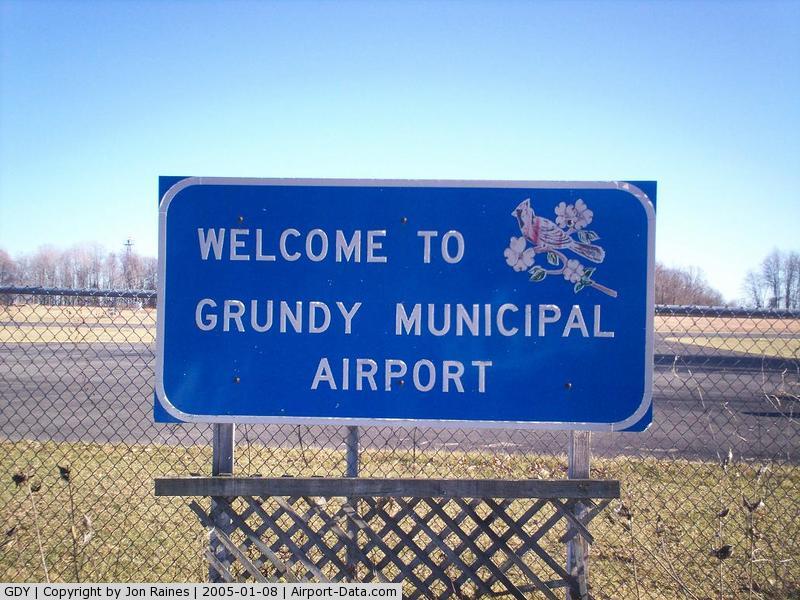
Local leaders say the three-year battle with the U.S. Office of Surface Mining over plans to extend the runway at Grundy Municipal Airport has cost taxpayers in this poverty-stricken corner of Appalachia millions of dollars in lost opportunities, and a list of regulatory hurdles remains before construction can even begin.

“We were attempting to permit this project as an airport project, not a coal-mining project,” said state Sen. Phillip P. Puckett, a Democrat from Lebanon who has been involved for three years with the effort to lengthen the runway from 2,200 feet to more than 5,000 feet — the length needed to comply with insurance standards for corporate jets. The holdup: Federal regulators have refused to allow the runway project to go forward without a mining permit because of the coal deposits below the land that will be dug up during construction.

“That’s where the permitting process got caught up — in determining whether it was an airport project or a mining project, by the Office of Surface Mining in Washington,” Mr. Puckett said. “We’ve tried to resolve that with them for the last couple of years. We’ve had very little success.”

Regulators contend that a mining permit is needed because local authorities plan to sell the coal dug up in extending the runway to help finance the overall project. The Office of Surface Mining said it “will continue to work with the state, as well as other affected local and federal officials, regarding the best way to proceed with the proposed airport expansion.”
While coal would be recovered from the site the lengthy permitting process is more reminiscent of a permanent mining facility, not one that would see some limited recovery of coal before being converted to another use in short order.

The airport is located in Grundy, VA- a mountainous town of about 1100 people thats also the county seat of Buchanan County in the southwestern tip of Virginia. The Grundy airport was completed in 1969 on land donated to the town by the United Coal Company. Since United Coal had already done surface mining on the land, it was flat enough to build a runway but the additional 2800 feet would require adjacent hills to be levelled. Those hills also contain a fairly rich seam of coal that the Breaks Regional Airport Authority would sell to help offset construction costs. However, since the project was proposed in 2004, the cost of coal has declined dramatically as the airport project has been hampered by delays.
Moreover, attorneys for the town advised that a municipality cannot obtain a mining permit, putting Grundy in a Catch-22 situation. Federal regulators had reportedly relented only after pressure on the US Ofice of Surface Mining from Senator Mark Warner (D- VA). Town officials are getting ready to attempt a 'Plan B' that would involve a permitting process that would involve the Federal Aviation Administration as the primary agency. However, even if it is reclassified as a construction project, the airport expansion requires approval from the Environmental Protection Agency and US Army Corps of Engineers- two agencies that have halted scores of projects in coal country in recent years.

Currently, Grundy and Buchanan county are accessable by US Route 460 and Virginia Route 83. The nearest airports that can accomodate private jets are in Abingdon, VA while the nearest commercial airports are in Beckley, WV or Johnson City, TN. Although there is a recently completed 1200-acre mixed use business park in Buchanan County, potential investors have to travel at least an hour and a half over narrow, mountainous roads from the nearest airport if they want to see the industrial park for themselves.
It’s important for jets to be able to land and take off from Grundy because, for economic-development prospects — businesses that might locate in the area — air travel is the only efficient way to get there. The 43-year-old facility is the only airport in Buchanan County.

“Most of the time, they fly into Abingdon, and you’re talking about [a drive of] an hour and a half, at least,” said Tim Potter, who heads the industrial development authority in Grundy, which is more than 50 miles on mountain roads from the nearest interstate highway. “It’s not convenient.”

Now, Buchanan County has something to show off to visitors: a glittering new 1,200-acre mixed-use business park built on a nearby mountaintop also flattened by mining.

The town, with creative financing and an infusion of federal flood-control dollars, has remade itself as a retail destination. Local economic development officials are hopeful that the business sites they offer will lure more companies to locate in Buchanan County — but first, investors and companies looking to relocate have to see the park.
As of 2009, Buchanan County was the poorest in the state of Virginia.

The region also recieved bad news last month with Bristol, VA-based Alpha Natural Resources announcing the closure of eight mines and layoffs of nearly 10% of the company's workforce. Although a mild winter and increased competition from natural gas have depressed coal prices in the last year or so, President Obama had promised to bankrupt the coal industry and shut down a number of coal-fired power plants.

Saturday, September 22, 2012

Bloomberg: South Dakota Mining College Grads Can Expect to Earn More than Harvard Grads

The massive Freeport McMoran open pit copper mine at Morenci, AZ. A run on commodities in recent years has created shortages of qualified workers and higher wages for those entering the mining industry. Kresge86 photo
After a nearly decade long bull market for commodities, mining companies throughout the United States have found themselves short of qualified personnel while attempting to keep up with market demand. This has translated to recent graduates from smaller mining colleges earning more than their Ivy-League counterparts right out of school.

A study tracking employee compensation data determined that recent graduates of the 2300 student South Dakota School of Mines and Technology made an annual salary of nearly $57,000.
Those leaving the college of 2,300 students this year got paid a median salary of $56,700, according to PayScale Inc., which tracks employee compensation data from surveys. At Harvard, where tuition fees are almost four times higher, they got $54,100. Those scheduled to leave the campus in Rapid City, South Dakota, in May are already getting offers, at a time when about one in 10 recent U.S. college graduates is out of work.

“It doesn’t seem to be too hard to get a job in mining,” said Jaymie Trask, a 22-year-old chemical-engineering major who was offered a post paying more than $60,000 a year at Freeport- McMoRan (FCX) Copper & Gold Inc. “If you work hard in school for four or five years, you’re pretty much set.”

A fourfold gain in commodities in the past decade reflects both surging demand and the industry’s failure to keep up. While new mineral deposits are getting harder to find, companies also are struggling to add enough skilled workers. That’s partly a legacy of U.S. colleges cutting back on mining programs. There were fewer than 28,000 people employed in U.S. metals mining in 2004, from 58,000 in 1993, the National Mining Association estimates. By 2011, it had rebounded to 40,000.

As many as 78,000 additional U.S. workers will be needed by 2019 to replace retirees, the Society of Mining, Metallurgy & Exploration said in a report in January. In Australia, the largest shipper of coal and iron ore, there will be a shortfall of 1,700 mine engineers, 3,000 geoscientists and 36,000 other workers in the five years ending in 2015, the report said.

Demand for mining-school graduates is exceptional in the U.S., where the unemployment rate for 20-to-24 year olds with Bachelor’s degrees was 11.8 percent in July. The jobless rate across the economy held above 8 percent for a 43rd month in August, government data show.
The total number of schools in the United States that offered mining degrees in 1982 was thirty- today that number is down to fourteen. Tuition for South Dakota School of Mines and Technology runs between $8400 and $13,000. By contrast, with a student body of nearly 27,000 tuition for Harvard averages in the neighborhood of $40,000.

This week also marks the one year of the anniversary of the Occupy Wall Street movement. One of several reasons cited for the protests was the rising costs of college tuition. In fact, Harvard professor, Massachusetts Democrat senate candidate and faux Native American Elizabeth Warren claimed to have been the intellectual brainchild behind the Occupy movement in an interview last year, but has had little if anything to say about the movement since then.

Yet, it somehow turns out the nation needs more mining engineers than it does unemployable Ivy-league Philosophy or Gay, Lesbian and Transsexual Studies Degree holders camped out in parks wondering why tuition for their diplomas are so high.

Saturday, July 7, 2012

Today's Train of Thought- Copper Toned, July 7, 2012


Today's Train of thought takes us to the Grand Canyon state and the 60-mile Copper Basin Railway. Since the late 19th century, copper mining has been pivotal to Arizona's economy with the completion of the Southern Pacific railway across the southern portion of the state making it economical to ship copper to market.

The extraction and refining of copper continues to be an important part of Arizona's economy, with the largest copper mine in the USA being located at Morenci in rural Greenlee county. Not surprisingly, Copper has also been big business for Arizona's railroads with some of them having been constructed for no other reason but to haul copper ore, copper concentrates and acid for leeching.

Central Arizona's Copper Basin started up in 1986 when they purchased a former Southern Pacific branchline from Magma Jct, AZ to Winkleman as well as the 7-mile former Kennecott Copper line from Ray to Ray Jct.

Since the beginning of the Copper Basin, the eastern end of the line has acted as a conveyor belt for the ASARCO's Ray mine and the smelter in Hayden, AZ. The Copper Basin also recieves ore from BHP Billiton's [NYSE- BHP] 30-mile San Manuel Arizona Railroad. In addition to shuttling ore, the Copper Basin also hauls gypsum and acid to and from the Union Pacific interchange and Magma Jct. Formerly held by Rail Management and Consulting Corp, the Copper Basin was purchased by Grupo Mexico [BMV- GMEXICOB] subsidiary ASARCO in 2006.

For more than 20 years, Copper Basin has operated primarily with a fleet of hand-me-down second generation EMDs. Here, railpictures.net contributor John Ireland caught Copper Basin railway GP39-2 #401 emerging from a short tunnel at Riverside, AZ near Ray Jct in the setting sun on September 8, 2009. From a photographger's perspective, Ireland speaks very highly of the Copper Basin due to the desert terrain the railway runs through and their very precise schedule, particularly in running the ore train.

Wednesday, March 21, 2012

Wisconsin Democrats Kill Union-Backed Mining Legislation That Would Allow Iron-Ore Mining in Badger State


One year after fleeing the state to prevent Governor Scott Walker's bill that would curtail the collective bargaining ability of public employee unions from being voted on in the state Senate, Badger State Democrats have dealt a blow to private-sector unions.

Assembly Bill 426, which would've overhauled the regulatory and permitting for the mining of ferrous minerals in Wisconsin, was narrowly defeated by a 17-16 margin in the State Senate- 16 Democrat state Senators and GOP State Senator Dale Schultz, who represents the 17th District in Southwestern Wisconsin, voted against the measure.
Wisconsin’s mining laws were developed to regulate sulfide mining, which utilizes chemicals in its mining and refining processes. The ore deposit in Iron County is a ferrous (i.e., iron) deposit, not a sulfide deposit. The process relies on water and magnets rather than chemicals. Additionally, the Department of Natural Resources would have issued a permit for the mine only after it had confirmed that the mine would operate in an environmentally responsible manner.
The bill not only had support from Governor Walker, the Wisconsin GOP and businesses, but also labor unions including the International Union of Operating Engineers, Iron Workers District Council of the North Central States, the Wisconsin Pipe Trades Association, North Central States Regional Council of Carpenters; and the Wisconsin Laborer’s District Council.

Florida-based Gogebic Taconite had reached a Memorandum of Understanding with the unions that the company would use union labor and Wisconsin-based contractors while the mine was under construction and continue using labor once the mine was up and running. Gogebic had begun the exploratory process in Iron and Ashland counties in northwestern Wisconsin [see map above- NANESB!]. Once the anticipated deposits of taconite iron-ore were located, Gogebic estimated the mines and processing facilities could be operating for up to 35 years and create as many as 3000 jobs once the mine was up and running.

The anticipated job growth would not have been limited to northwestern Wisconsin. Two large mining equipment manufacturers- Joy Global [NYSE- JOY] and recently-acquired Caterpillar [NYSE- CAT] subsidiary Bucyrus International both operate out of the Milwaukee area and also employ union labor.

However, after the State Senate killed AB 426, Gogebic announced that they would be pulling out of Wisconsin altogether. Other mining companies are unikely to step in and fill the void unless the issue of overhauling regulations for mining ferrous minerals in the Badger State is revisited.

Since Gov Walker is facing a recall election this year, there is a school of thought that public employee unions like the AFSCME and SEIU pressured the Democrats to vote unanimously against AB 426 to deny Walker any sort of victory or good publicity heading into the recall campaign.

While some green activists claimed concern about environmental degradation or harm to adjacent wetlands, similar mining operations have been taking place for over a century just to the west in Minnesota's Mesabi range without the widespread environmental devestation activists claim is inevitable.

Friday, April 29, 2011

BipolarNational Borderline Psychosis Update- Cartels Going For Gold? Massacre Suspect Nabbed by Mexican Military; More Mass Graves Unearthed


I'm not sure how many people still buy the notion that firearms legally purchased in the USA at Wal Mart or Cabellas are single-handedly responsible for the narco-violence down in Mexico, but a couple of stories that broke this month can effectively bury that tired and dishonest talking point.

Mexican cartels and other criminal groups have been helping themselves to weapons caches left over from the numerous civil wars in Central America in the 1980s as well as military arsenals throughout the region.
The weapons run the gamut from assault rifles to anti-tank missiles, some of which the U.S. supplied during regional conflicts more than two decades ago. The slippage from military armories occurs regularly.

The feared Mexican organized crime group known as Los Zetas has stolen weapons from military depots in Guatemala three times in recent years, Guatemalan Deputy Security Minister Mario Castaneda told an anti-narcotics conference in early April in Cancun, Mexico.

In February, U.S. prosecutors unsealed a five-count indictment against a retired army captain from El Salvador for allegedly selling or offering C-4 plastic explosives, assault rifles, grenades and blasting caps to undercover agents.

U.S. diplomatic cables obtained by WikiLeaks and passed to McClatchy Newspapers show that American envoys have repeatedly voiced concern over lax controls on military weapons depots in Guatemala and Honduras.

One cable from June 2009 carries a simple message line: "Rogue elements of Guatemalan military selling weapons to narcos."

The cable was sent after a narcotics raid on a warehouse south of Guatemala City on April 24, 2009, when agents clashed with "a number of heavily armed Zetas," leaving five agents dead. Inside the warehouse, the unit found 11 machine guns, a light antitank weapon, 563 rocket-propelled grenades, 32 hand grenades, eight landmines and abundant ammunition in crates with the seal of a Guatemalan military industrial facility.

U.S. defense analysts determined "with a high degree of confidence that many of these weapons and munitions came from Guatemalan military stocks," the cable said.

"The involvement of Guatemalan military officers in the sale of weapons to narco-traffickers raises serious concerns about the Guatemalan military's ability to secure its arms and ammunition," it added.

Moreover, it puts police tasked with confronting the cartels at a sharp disadvantage, the cable said, because they "now have to go up against weapons from Guatemala's own military."

Further piquing U.S. officials, Washington furnished some of the munitions.

That turned out to be the case in Honduras, where U.S.-supplied grenades and light anti-tank weapons turned up as far away as Ciudad Juarez, the narco-infested Mexican city on the border with Texas, and on Colombia's San Andres Island, an entry point for weapons going to drug-trafficking guerrillas
According to State Department documents, Mexico accounted for $177 million in sales of American-made weapons in 2009- exceeding Iraq or Afghanistan. Many of these sales were tracked by the state department as 'Direct Commercial sales' to the Mexican government.

To make things even more interesting, narco-watchdog blog Borderland Beat points out that the sale, storage and transportation of legally purchased firearms in Mexico is monopolized by the SEDENA- Mexico's Secretariat for National Defense. Yet despite this apparent monopoly, a substantial number of M-16 style rifles ordered from America in transactions brokered by Mexico's SEDENA and supposedly destined for state and municipal police agencies in Mexico simply 'disappear' only to turn up later at crime scenes in Mexico.

This, of course, is in addition to the privately purchased firearms on the US side of the border that the ATF had intentionally allowed to be illegally exported to Mexico by smugglers and straw purchasers. As far back as 2009, equipment from US Government inventory ranging from MRE's and night vision equipment to automatic rifles and jet engine parts were reported missing and turned up in places as far afield as Ciudad Juarez, Colombia and Iran.

Always looking for additional sources of revenue, Mexico's cartels have reportedly set their sights on that nations vast mineral deposits and the domestic and foreign mining companies tasked with unearthing those deposits.
As international metals prices surge, gunmen are attacking workers to steal valuable ores and equipment at often remote mining sites that have fallen under the gaze of drug gangs extending their reach into new criminal rackets.

Canadian miner Torex Gold Resources Inc halted drilling at its exploration property in the western state of Guerrero last month after assailants stole trucks. Mexican authorities blamed a drug cartel for illegally extracting iron ore at another site and exporting it to China.
Mexico is the 2nd largest producer of silver in the world and also has substantial deposits of gold, copper, iron ore, zinc and lead. Entering Friday morning, silver was trading at over $48 an ounce while gold was trading at record highs of $1534 an ounce.

Aside from Torex [TSX: TXG], International mining companies like New Gold [TSX: NGD] or Ternium [NYSE: TX] have operations in troubled areas like Michoacan, Guerrero or Durango.
Steel producers say they lost $240 million to thefts in 2010 and have seen the pace of robberies double so far this year, according to a Mexican industry association.

"They are robbing from companies' (iron ore) deposits or they are taking over the deposits completely," said Raul Gutierrez, head of the national steel chamber. "It makes it impossible to work there."

The wave of thefts has spilled out of an escalating drug war in Mexico, which pits an increasingly stretched military against brutal gangs warring over smuggling routes to the United States and other lucrative illicit businesses.

Deteriorating security is a mounting concern for investors, industry surveys show.

The lawlessness led to a slip in Mexico's ranking in the Fraser Institute's annual study of the top global mining destinations. Some 39 percent of companies surveyed this year counted violence as a "strong deterrent" for investment, versus 33 percent in Colombia, where a U.S.-backed offensive has in recent years quelled a cocaine-funded guerrilla conflict.

Iron ore mines in Mexico's western state of Michoacan have been besieged by the powerful La Familia (The Family) drug cartel that operates in large swathes of the state, extorting businesses and illegally mining material for export.

A captured money launderer belonging to La Familia confessed to exporting 1.1 million tones of iron ore last year to China through three established companies in Mexico, netting $42 million, according to the attorney general's office.

Companies are being forced to hire more guards or change the way they transport goods, with some shipping valuable metals by air instead of on dangerous highways.

"We spent 20 percent more on security last year," said Armando Ortega, vice president for Latin America at New Gold Inc, which owns the Cerro San Pedro gold mine in San Luis Potosi state. "There are miners that have suffered robberies of gold-silver dore bars or concentrates. The high prices make gold an attractive target for organized crime.
I was made tangentially aware of the various cartels interest in mining last year after investigators said a deadly car bombing in Juarez used the water gel based explosive Tovex, a popular replacement for dynamite with mining companies.

I've also been entertaining another theory regarding the cartels and mining. Aside from their lucrative drug smuggling and human trafficking activities, groups like La Familia Michoacana also reportedly engage in the extortion of already-existing businesses in territory they control, so who's to say this wouldn't include extortion against the various mining companies for continuing to operate in what the cartels consider 'their' territory?

Also, even though they would be making money hand over fist from both their criminal pursuits and their newfound interest in metallurgy, I'm wondering if stock manipulation of the various publicly-traded mining companies could be another source of revenue for them.

Think about it- how difficult would it be for the cartels to round up some hired guns to attack the miners, destroy equipment, rob the mines of concentrated ore, bullion or dore bars or cut off power and water to some of the more isolated facilities? And basically keep it up until the feasibility of operating that mine is in doubt? Even if they fail in closing down the mines outright, the cost of stepped up security precautions would eat into that company's profit margin pretty quickly, and by extension, their share price (at least if they're heavily invested in Mexico).

Shares of Torex slid in March when the company announced that it was temporarily suspending operations after company employees were attacked and company vehicles were robbed in Morelos. Since then, shares of the company on the Toronto Stock Exchange have levelled off as Torex resumed operations amid stepped-up security.

Exit question (however hypothetical): Who's to say that somebody with inside knowledge of the activities directed against the mining companies wasn't buying up shares when they were plummeting in value and will sell them once production resumes and the share prices bounce back?

TEXAS: Police in the border town of Brownsville are trying to determine who set up an IED along a stretch of US Highway 77 over the weekend. A passing motorist noticed the device and called police on Sunday afternoon. Authorities shut down the southbound lane of the highway for just under two hours while searching the area for any additional devices and disarmed the device using a remote controlled robot.

NEW MEXICO: A small aircraft believed to be smuggling narcotics crashed into Heron Lake, NM on Sunday morning. Aside from the pilot, there was no indication of whether or not there was anybody else on board due to the plane sinking to depths greater than 100 feet. However, within hours of police and searchers arriving, small packages of cocaine started to make their way to the surface.

The lake is located in a state park in Rio Arriba County, NM which abuts the Colorado state line.

ARIZONA: An Arizona gun dealer reportedly approached the ATF with concerns that firearms from his store were being funneled to criminals through straw purchasers. A Congressional investigation into the ATF's ill-advised 'Operation Fast & Furious' shows that agents encouraged him to continue the sales, despite the red flags raised.
The investigation into a federal operation that allowed Mexican drug cartels to acquire U.S. weapons escalated Thursday with new revelations that an Arizona gun dealer repeatedly expressed fears that his guns were falling into the "hands of the bad guys" but was encouraged by federal agents to continue the sales.

A series of emails released by congressional investigators showed that the Bureau of Alcohol, Tobacco, Firearms and Explosives encouraged the gun dealer against his better judgment to sell high-powered weapons to buyers he believed were agents for the drug cartels.

Employees of the dealer videotaped gun buyers — suspected "straw purchasers" who could legally buy the guns, though cartel members could not — exchanging money with other individuals on the dealer's premises.

In an eerie case of premonition, the gun dealer expressed fears that the guns he was selling could be used against U.S. border agents.

"I wanted to make sure that none of the firearms that were sold per our conversation with you and various ATF agents could or would ever end up south of the border or in the hands of the bad guys," the dealer, who has not been named, wrote in June 2010 to David Voth, the lead ATF case agent in Phoenix. "I want to help ATF with its investigation but not at the risk of agents' safety, because I have some very close friends that are U.S. Border Patrol agents in southern AZ."

Three guns sold to suspects who were part of Project Gunrunner have since turned up at the scenes of the deaths of two U.S. agents — in the Mexican state of San Luis Potosi and near the Mexican border in Arizona.

"Not only were the ATF agents who later blew the whistle [on the investigation] predicting that this operation would end in tragedy, so were the gun dealers — even as ATF urged them to make the sales," Sen. Charles E. Grassley (R-Iowa), ranking member of the Senate Judiciary Committee, said in a letter with the new emails to Atty. Gen. Eric H. Holder Jr.

The Justice Department in its only official response to the congressional inquiry denied that the ATF "sanctioned" or "otherwise knowingly allowed" the sale of assault weapons to straw purchasers, who then transported them to Mexico.

The new emails suggest that the Arizona gun dealer was seeking assurances from the ATF and the U.S. attorney's office that the company would not be held responsible if someone got hurt with guns that ended up in the hands of gunrunners.

Voth, the ATF agent, wrote to the dealer: "I understand that the frequency with which some individuals under investigation by our office have been purchasing firearms from your business has caused concerns for you. … However, if it helps put you at ease we (ATF) are continually monitoring these suspects using a variety of investigative techniques which I cannot go into [in] detail."

News reports in June 2010 that guns purchased in the U.S. were being found at Mexican crime scenes prompted the dealer to again express concerns.

"I shared my concerns with you guys that I wanted to make sure that none of the firearms that were sold per our conversation with you and various ATF agents could or would ever end up south of the border or in the hands of the bad guys," the dealer wrote, adding that the reports are "disturbing."

On "one or two" occasions when the dealer's employees videotaped a suspected straw purchaser exchanging money with another person, the ATF urged that the sale go forward, but the employees refused, Grassley said in his letter.

"In light of this new evidence, the Justice Department's claim that the ATF never knowingly sanctioned or allowed the sale of assault weapons to straw purchasers is simply not credible," Grassley wrote.
Congressman Darrel Issa (R- CA49), House Committee on Oversight and Government Reform Chairman has threatened ATF and Justice Department officials with contempt proceedings for not replying to subpoenas issued at the end of March.

ELSEWHERE IN ARIZONA: An Arizona Sheriff has alleged this month that the US Border Patrol is acting under a 'No Apprehension' policy in the Tuscon sector.

Cochise County Sherriff Larry Dever said that he had received hundreds of supportive e-mails from active and retired former Border Patrol agents confirming the policy, apparently implemented at times to keep apprehension number artificially low. Homeland Security secretary Janet Naploitano had recently cited lower border apprehension as proof the border was more secure under her watch.
“This is nothing new, during my career with the border patrol, this was done regularly,” said another email to Dever reviewed by FoxNews.com.

“By assigning agents to different tasks, locations, etc., the apprehensions can be increased or decreased dramatically,” wrote Dan McCaskill Jr., a retired Border Patrol agent who worked in the Anti-Smuggling Unit.

McCaskill went on to describe how, he said, apprehension numbers were regularly
manipulated to achieve various budget, equipment or manpower goals.
A second Arizona Sheriff, Pinal County Sheriff Paul Babeau, had also testified before a
Senate Homeland Security Committee in support of Dever's claims.

The Tucson local of the National Border Patrol Council union also came out in support of Dever, and posted this message on their website after the FoxNews.com report.
“Sheriff Dever is right. We have seen so many slick shenanigans pulled in regards to 'got-aways' and entry numbers that at times it seems David Copperfield is running the Border Patrol. Creating the illusion that all is well and you can start having family picnics in the areas where we work has been going on far too long. Has there been improvement in some areas? Absolutely. Is the border anywhere near 'under control'? Absolutely not. Do some in management play games with numbers and cater to the wishes of politicians like Janet Napolitano and David Aguilar? Resoundingly, yes. Time for the foolish political games to stop.”
Instead of apprehending illegal border crossers, agents are reportedly advised from on high to 'TBS' (or 'Turn Back South') any illegal border crossers they detect, despite the same people attempting to cross as soon as 10 minutes later.

AUSTRALIA: A report from Australia's leading criminal intelligence body issued earlier this month has indicated that Mexican cartels are gaining a foothold Down Under.

The Australian Crime Commission report suggested that the Mexican cartels could account for as much as 50% of the cocaine imported to Australia and expressed concerns that the drug traffickers could resort to the same violent and brutal tactics used in Mexico to try and expand their influence.

Bordered by nothing but coastline and with cocaine fetching a higher price than in the USA (US$ 200 an ounce vs as little as US$30 an ounce in the USA), Australia is considered a lucrative growing market by the cartels. To that end, some organizations like the Sinaloa cartel have partnered with Australian branches of the 'Ndrangheta (Calabrian mafia) in Sydney and Melbourne to aid in smuggling, distribution and sales.

GUATEMALA: Police in Guatemala this week have arrested a suspected drug trafficker nicknamed 'The Patriarch' with suspected ties to the Sinaloa cartel.

71 year old Waldemar Lorenzana was arrested by local police and DEA agents outside of Guatemala City, although his three sons- all thought to be active in drug trafficking- are said to be still at large.

Lorenzana had been sought by the DEA since 2009 and a $500,000 reward was offered for information leading to his capture. The State Department is likely to request 'The Patriarch's' extradition to the USA.

Mexican cartels have stepped up recent efforts to set up shop in Central America where law enforcement is even less reliable. Los Zetas has reportedly successfully recruited members of the Kabiles special operations forces from Guatemala's military.

TAMAULIPAS: Forensic experts and Mexican soldiers are sifting through mass graves in northern Mexico, a month after armed men set up roadblocks and boarded buses travelling along National Highway 101 along the Gulf coast of Tamaulipas for the last several months, pulling off mostly young men. The abductions and carnage had left the normally busy highway in the norteastern corner of Mexico virtually deserted during the week before Easter when many American living across the border in Texas would be vacationing or visiting relatives.

So far, authorities have pulled 177 bodies out from mass graves outside of San Fernando- not far from where 72 migrants were massacred at a isolated ranch last summer. More disturbingly, hardly any of the bodies examined have shown indications that the victims were shot. Instead, Mexican investigators say it appears as though most of the victims were killed by blunt-force trauma and a sledgehammer was found at the crime scene.

The territory in which the slayings took place is being fought over by the Zetas and one theory is that the one of the cartels abducted bus passengers and attempted to press them into service as drug mules of sicarros (low-level gunmen), murdering those who refused.

Mexico's Navy issued a statement saying they had captured the suspected mastermind of the massacres of the immigrants in San Fernando as well as the more recent abductions from intercity buses earlier this month.

Omar Martin Estradad flanked by Mexican Marines- Marco Ugarte/AP Photo
34 year old Martin Omar Estrada Luna is thought to be the head of a northern Mexico branch of Los Zetas. Luna, aka 'El Kilo' grew up on the American side of the border in the Yakima Valley region of Washington state. Authorities in Tieton, WA remember Luna as a dropout who racked up a juevenile record before moving on adult felony charges of burglary and drug dealing. Luna was reportedly last deported in 2009, but those who knew him from his time in Tieton question whether or not he was competent enough to have risen through the hierarchy of one of the world's most notorious and ruthless criminal organizations so quickly.

Other members of a San Fernando based Zetas cell were detained by Mexican Marines and paraded before the media last weekend as well. In addition, at least 17 members of San Fernando's municipal police department were detained and charged by Mexico's federal attourney general's office for charges of protecting Luna and other Zetas, covering up the kindappings and in some instances directly participating in the murders.

ELSEWHERE IN TAMAULIPAS: Mexican soldiers reportedly acting on a tip freed at least 52 migrants from Central America who were being held captive in the border city of Reynosa. The cartels and other Mexican gangs will sometimes adbuct migrants heading to the USA transiting through Mexico and demand ransom from their families in America or the country of origin.

-A convoy of gunmen in SUVs went on a rampage last week in the border town or Miguel Aleman, opening fire on the Tamaulipas State Police and local transit police headquarters and torching them before being driven out of the town in a running firefight with the Mexican Army. One civilian and an unpecified number of gunmen were killed in the attack according to local police.
According to the 8th Military Zone in Reynosa, the Zetas also attacked a military patrol along the Riberena highway prior to the attack in Miguel Aleman which prompted the mobilization of army troops toward the area.

Also prior to the arrival of the military, when Zetas arrived in town, they began shooting at the law enforcement headquarters and shot at the buildings and patrol cars as well as causing other damage, the Mexican law enforcement official stated.

The group then went around town shooting at and setting fire to a number of high-profile buildings along the city’s main avenue, including the Ford and Nissan dealerships, an Auto Zone store, a Stripes convenience store, a large furniture store and a used car lot.

During the rampage, one employee of the local Coca-Cola Co. bottling plant was killed as he drove to work. His name was not released pending notification of next of kin, the law enforcement official said. When military forces arrived toward the end of the rampage, a shootout ensued that left several gunmen dead on the street.
On Thursday, the Mexican Army was involved in a 3-way shootout when a patrol was resonding to sounds of gunfire from a shootout between gunmen from the Zetas and Gulf cartel. The shootout, involving Gulf and Zetas enforcers wearing body armour and travelling in a SUV, began in the early morning hours of the middle of the farming town of Arbacuz with six dead gunmen and an unknown number in custody.

DURANGO: In the northwestern corner of Mexico, Federal police and soldiers are exhuming another series of mass graves in the capital city of Durango (which happens to be named Durango). 87 bodies were pulled from a grave under a repair shop while 17 other decomposing bodies were found at a nearby hacienda.

GUERRERO: Four women and a teenage girl were found stripped, bound and with their throats slit in the popular resort city of Acapulco. Two of the bodies were discovered in a beauty salon located adjacent to an area known for drug dealing and prostitution while another body was discovered in a parked car and the 4th body was dumped in a street behind a church.

Investigators have not ruled out a possible connection with organized crime and prostitution in the murders. Some brothels or massage parlors in that part of the country sometimes operate under the guise of beauty salons.

[hat tip- Friends of Ours; Borderland Beat]

Monday, December 20, 2010

Today's Train of Though- Either Ore, Dec, 20, 2010

Today's Train of Though takes us to the nothern reaches of Minnesota and iron ore country in the grip of one of their notoriously frigid winters.

For nearly 70 years, the Duluth, Missabe & Iron Range earned its keep hauling iron ore and later taconite from the mines to the north and west of Duluth, MN to the massive ore hauling ships waiting at the Twin Harbors. There also has been significant limestone traffic on the DM&IR as well.

The Canadian National reached the Twin Harbors from the west by way of its Duluth, Winnipeg & Pacific subsidiary. In the 1990s, both Canadian railroads were looking to expedite traffic from Western Canada to Chicago. The CP had an advantage in that it had a wholly owned subsidiary in the Soo Line, which ran from the US/Canadian border at Portal, ND to Chicago by way of the twin cities.

Until 2001, Canadian National had to rely on agreements with American railroads to compete with Chicago-bound traffic from CP. In October of that year, the now privately-held Canadian National purchased super-reigonal Wisconsin Central, giving CN nearly direct access to Chicago from the Duluth-Superior area. The only hinderance at the time was a gap of roughly 10 miles on the Duluth, Missabe and Iron Range between the end of the DW&P trackage and beginning of the former Wisconsin Central rails.

For CN, this problem was resolved nearly three years later with the May 2004 Purchase of the Duluth Missabe & Iron Range's parent company, Great Lakes Transportation (itself a spinoff from US Steel). The Canadian National's acquisition of Great Lakes Transportation not only gave them the DM&IR, but also the Elgin Joliet & Eastern in Chicago and western Pennsylvania's Bessemer & Lake Erie.

The CN still serviced the mines, ore docks and steel mills on its respective former Great Lakes Transportation property, but it was becoming increasingly interested in increasing capacity on the DM&IR and EJ&E.

And like other railroads purchased by Canadian National, the locomotives and rolling stock bearing the DM&IR colors would be on their way out, either sold off or repainted into Canadaian National colors (see Wisconsin Central, BC Rail). However, railpictures.net contributor Scott Carney snapped Iron Range SD38 #205 leads two bretheren dutifully charging uphill and around Spirit Mtn Curve (featuring a commanding view of Superior, WI) with a load of empty ore cars heading back to the mines on a snowy March 2007 day.

Most of the SD38s would be gone from Iron Range property by the end of 2009, replaced by power from elsewhere on the CN system.

Sunday, December 12, 2010

NZ Police: All 29 Trapped Miners Feared Dead

Image- NZHerald

A second, more powerful blast rocked the Pike River Coal mine on New Zealand's South Island on Nov. 24th where 29 miners had been trapped since an initial blast on the afternoon of November 19. Police superintendent Gary Knowles said that there was no chance any of the trapped men could've survived the second blast, which lasted for as long as 30 seconds.

A third and fourth blast a few days later was strong enough to ignite the coal in the mine, further damaging the mine's already crippled ventilation system and setting some of the nearby vegetation above-ground on fire. The most recent development is that the damaged ventialtion system has been capped, which will allow the GAG unit brought in from Australia (basically a jet engine designed to supress underground coal fires) to work more efficiently.


With the well-deserved jubilation surrounding the successful rescue of the 33 miners in Chile, this comes as a particularly harsh kick in the gut. Perhaps most tragic was the story of 17 year old Joseph Dunbar, who was eager to start his new job at Pike River and was among those trapped in the intial blast on his first day.

The 29 miners have been identified as:
Conrad Adams, 43 (Greymouth)
Malcolm Campbell, 25 (Greymouth - Scottish)
Glen Cruse, 35 (Cobden)
Allan Dixon, 59 (Runanga)
Zen Drew, 21 (Greymouth)
Christopher Duggan, 31 (Greymouth)
Joseph Dunbar, 17 (Greymouth)
John Hale, 45 (Ruatapu)
Daniel Herk, 36 (Runanga)
David Hoggart, 33 (Foxton)
Richard Holling, 41 (Blackball)
Andrew Hurren, 32 (Greymouth)
Jacobus 'Koos' Jonker, 47 (Coben - South African)
William Joynson, 49 (Dunollie - Australian)
Riki Keane, 28 (Greymouth)
Terry Kitchin, 41 (Runanga)
Samuel Mackie, 26 (Greymouth)
Francis Marden, 42 (Runanga)
Michael Monk, 23 (Greymouth)
Stuart Mudge, 31 (Runanga)
Kane Nieper, 33 (Greymouth)
Peter O'Neill, 55 (Runanga)
Milton Osborne, 54 (Ngahere)
Brendon Palmer, 27 (Cobden)
Benjamin Rockhouse, 21 (Greymouth)
Peter Rodger, 40 (Greymouth - British)
Blair Sims, 28 (Greymouth)
Joshua Ufer 25 (Australia)
Keith Valli, 62 (Winton)

Monday, November 22, 2010

Malfuntioning Robot, Hard Rock Hinder Rescue of Trapped New Zealand Miners

Efforts to reach 29 miners trapped by an underground explosion on New Zealand's South Island ground to a halt as a military robot that was relaying images from inside broke down in a passageway.
Police superintendent Gary Knowles said the army robot sent in to transmit pictures and assess toxic gas levels was damaged by water and out of commission. Authorities were urgently seeking other such robots from West Australia and the United States to replace the broken one, Knowles said.

"I won't send people in to recover a robot if their lives are in danger," he said. "Toxicity is still too unstable to send rescue teams in."

Making matters worse, the drilling team boring into the mine tunnel had hit "very hard rock" overnight, Knowles said. The police superintendent's statements came as rescuers waited impatiently for a chance to test if air quality underground was safe enough for them to go in to pull out the miners, who have been trapped for nearly five days.

Family members have expressed frustration with the pace of the response as officials acknowledge it may be too late to save the miners, who have not been heard from since a massive explosion ripped through the Pike River Mine on the country's South Island on Friday.

A buildup of methane gas is the suspected cause of the explosion. And now the presence of that gas and others — some of them believed to be coming from a smoldering fire deep underground — are delaying a rescue over fears they could still explode.

A diamond-tipped drill was put to work as workers hit layers of hard rock and came within 33 feet (10 meters) of the tunnel where they believe some of the miners are trapped, police superintendent Gary Knowles said. The 500-foot (160-meter)-long shaft they are creating will allow them to sample gas levels — including explosive methane and carbon dioxide — and determine if rescuers can finally move in days after the blast.

Knowles said rescuers planned to drop a listening device down the hole to see if they could hear anything — such as tapping sounds — that might indicate that the miners were still alive.

"This is a very serious situation and the longer it goes on, hopes fade, and we have to be realistic. We will not go underground until the environment is safe," Knowles said.

Two workers stumbled out of the mine within hours of Friday's explosion, but there has been no contact at all with the remaining 29. A phone line deep inside the mine has rung unanswered.
Police on Tuesday said that a second robot from New Zealand's military was being flown in by helicopter from Wellington that that a robot specialized for underground work was being flown in to Auckland from Australia or the USA and onto Greymouth from there. I'm hoping that this will have a similar outcome to the Chilean miners' saga last month, but unfortunately that may not be the case at this point.

Tuesday, October 12, 2010

Endgame! Rescuers Begin Bringing Trapped Chilean Miners to Surface

Man oh man...what a year for Chile. First there was that massive magnitude 8.8 earthquake, then they got their asses handed to them in the World Cup. Somehow, I think the latest news out of Copiapo more than makes up for it.

I figure it would only be a matter of time before I updated the saga of the 33 trapped Chilean miners, but as it turned out, it was a little sooner than I expected.

A metallic capsule named 'The Phoenix' was set to start bringing up the miners trapped at the San Jose mine one by one this week. The miners had been trapped since August, although supplies were being sent down to them through a hole roughly the diameter of a grapefruit as rescuers were working on a larger, parallel shaft.

It's been estimated that it may take as long as 36 hours for all the miners to be pulled up to the surface, but the capsule has successfully reached the miners and the first half dozen have made it back to the surface. Along with the head of Chile's state-run copper company, a medic from Chile's navy went down in the capsule to do a cursory examination of the men before the capsule hauled them up. Right now, all of the men have been given sunglasses- even though they were being brought up to the surface shortly after midnight- because of the glare of spotlights from the media and rescuers. The capsules are also equipped with video cameras, an intercom and oxygen masks to monitor their health on the way back up.

Once at the surface, the men were greeted by their families and Chilean President Sebastian Piñera before being sent to a triage center and hospital in Copiopo for further physical evaluation.

I would like to take this opportunity to congratulate the miners, their families and the rescuers for their (thus far) successful rescue that has caught the world's undivided attention. All too often we hear about mining accidents on this scale with very tragic outcomes, so it it very welcoming to get some good news along these lines for a change.

[To honor the end of the miner's plight, I'm listening to this- but playing it backwards, of course...NANESB!]

UPDATE 10/13: The last of the 33 miners, 54 year old foreman Luis Urzua, has reached the surface in the Phoenix capsule tonight. Urzua and the other 32 miners are undergoing examination in nearby Copiapo, but are believed to be in overall good physical health.

Sunday, October 10, 2010

Crimson Tide: Hungarian Villages Inundated With Red, Caustic Slurry From Collapsed Reservoir

(AP/Bela Szandelszly)
At least six people were killed, 116 hospitalized and a half dozen other missing when the walls to a reservoir at an alumina plant in Western Hungary collapsed, inundating adjacent towns with a fast-moving tsunami of toxic red slurry.

Authorities in Hungrary have also evacuated the nearby village of Kolontar over fears that the remaining walls on the reservoir at the MAL Hungarian Aluminum facility in Ajka could collapse when cracks were discovered. As of early Monday (Hungarian time), Inspectors say that the cracks haven't expanded yet, giving workers time to try and shore up the reservoir's walls.

Meanwhile, Hungary's top investigative agency has opened a criminal probe of MAL's Ajka facility and seized documents related to the maintainence of the reservoir's walls. The wave of sludge reached the Danube river via one of it's tributaries, although observers say that Europe's second largest river is abosrbing it without much inital damage so far. However, there are concerns about the residual sludge along the path drying up and turning into a highly metallic dust that might be inhaled.

Thursday, September 2, 2010

In South America, A Bizzare Love Triangle With One Party 700m Underground

Trapped in a collapsed mine 700M below the surface?

Things could be worse- at least your wife hasn't found out that you're screwing around with that one chick from the training course at work a few years back....

What's that? She has....? Aw shit. Well...sucks to be you.

One of the 33 miners trapped in a Northern Chilean copper and gold mine is hoping the 4-month timeline for a possible rescue is actually a lowball estimate after his wife encountered his mistress at a vigil held by the families of the trapped workers.
Yonni Barrios' wife, Marta Salinas, and Barrios' lover, Susana Valenzuela, were both holding vigils for him outside the mine.

Salinas was stunned when she heard Valenzuela shouting his name amid a crowd of miners' loved ones.

Salinas, 56, is said to be "horrified". However, she is determined not to give up her man to her love rival.

She told friends: "Barrios is my husband. He loves me and I am his devoted wife. This woman has no legitimacy."

But Valenzuela said the 50-year-old miner, who she met on a training course five years ago, was planning to leave his wife for her.

She said: "We are in love. I'll wait for him."

Barrios has been one of the heroes of the landslide drama -- using his first-aid training to treat sick colleagues.

He also vaccinated all 33 men, including himself, against flu and pneumonia.
One has to wonder if Barrios is using anything taught at the training course he met Valenzuela at that could be applicable in his situation.

[Hat tip: Jammie Wearing Fool]

Monday, August 23, 2010

Chilean Miners Found Alive and Well 17 Days After Mine Collapse


33 workers missing and feared dead after an Aug. 5th mine collapse in northern Chile were discovered alive and well by rescue workers over the weekend.

At a news conference with family member of the miners outside the San Jose copper and gold mine near Copiapo, Chilean President Sebastian Piñera announced that the miners had been found alive and well in an underground shelter and were able to pass a note through a grapefruit-sized hole to rescuers. The note Piñera displayed during his conference simply read "All 33 of us are fine in the shelter". Rescuers were able to lower a camera through the hole, which showed many of the miners shirtless and waving at the cameras.

The news came as rescuers and loved ones were giving up hope that the trapped be would be found and was cause for celebrations throughout the country, even as the good news was tempered with warnings that it could take up to 4 months to safely extract the miners.

While rescuers are working to shore up the smaller hole with which they can use to drop food, water, medicine and microphones down, details are emerging about the trapped miners' ingenuity in which they used a bulldozer to provide a canal of fresh water and used power from a truck's engine to rig a makeshift lighting system.

A specialized drill loaned by the state-run CodelCo is expected to take 3-4 months to reach the men. Chile's mining minister Laurence Goldborne said that rescuers would have to proceed cautiously in order to avoid triggering another collapse

In the meantime, two smaller shafts will be dug to further accommodate ventilation and communication with the surface. Authorities plan on sending microphones down so the trapped miners can communicate with loved ones on the surface.