Some of us like staying warm during the winter months. Those of us who don't apparently nag companies about replacing a proven reliable energy source such as coal with renewables like solar or wind.
For instance, a Wisconsin environmental group decided that Madison Gas and Electric [NASDAQ- MGEE] should no longer use coal and instead try to keep people warm through the harsh winter months with unreliable wind, solar or biomass.
To make their case, the set up an inflatable coal plant during a protest in front of the headquarters of Madison Gas & Electric, powered by renewable energy.
As the embedded video shows, the activists couldn't even keep their inflated coal-fired power plant for the duration of the protest with renewable energy. Yet they want Madison Gas and Electric to power southern and central Wisconsin with the same forms of energy that could even keep their prop inflated for fifteen minutes.
While Madison Gas and Electric does utilize wind turbines in Wisconsin and northern Iowa and solar panels in Madison, the company also utilizes both coal and natural gas fired power plants in Portage, Madison and Oak Creek, WI.
Showing posts with label coal. Show all posts
Showing posts with label coal. Show all posts
Wednesday, October 22, 2014


Saturday, August 2, 2014
Australia Scraps Carbon Tax
Australia, the twelfth largest economy in the world, has voted to repeal a costly and contentious carbon tax in a 39-32 vote in Australia's senate last month.
However, implementation of the carbon tax and other emissions laws proved costly for the then-incumbent Labour Party. Former prime-minister Kevin Rudd was unseated in an internal party challenge from Julia Gillard as his approval ratings plummeted due in part to proposed Resource Profits Super Tax which would've levied a tax of no less than 30% on mining companies should their annual profits pass an annual A$75 million threshold.
As leader of the opposition party, Tony Abbot warned the Australian federal government against spending millions of taxpayer dollars for an ad campaign in support of the Carbon Tax in 2011. During the 2013 elections, Abbot campaigned against Labour's carbon tax scheme, saying it increased energy costs and hurt small businesses.
According to 2011 figures from the US Energy Information Administration, Australia is the world's largest exporter of coal and 4th largest exporter of LNG. The demise of the Resource Profits Super Tax also is likely to increase investment and exploration in the Coober Pedy area of the Australian outback, which is believed to hold as much as 200 billion barrels worth of oil according to multiple reports from last year.
The former Labor government, while introducing a price on carbon, said the move would help slash emissions by 160 million metric tons by 2020. It offered voters billions of dollars in compensation through tax breaks and welfare payments for increased costs stemming from one of the most dramatic reforms ever attempted in the energy-reliant economy.
But after the global financial crisis took hold in 2008, followed by the end of a decadelong mining boom in 2012 that slowed growth and employment in the A$1.5 trillion (US$1.4 trillion) economy, Australian voters turned against climate laws—recognized by the International Energy Agency as model legislation for developed countries—blaming them for rising energy bills and living costs.
The World Bank in May produced a State and Trends of Carbon Pricing report counting carbon pricing programs in 40 nations and 20 regions worth a collective US$30 billion, while also singling out repeal plans in Australia as one of the biggest international threats to the rollout of similar programs elsewhere, given its example.
However, implementation of the carbon tax and other emissions laws proved costly for the then-incumbent Labour Party. Former prime-minister Kevin Rudd was unseated in an internal party challenge from Julia Gillard as his approval ratings plummeted due in part to proposed Resource Profits Super Tax which would've levied a tax of no less than 30% on mining companies should their annual profits pass an annual A$75 million threshold.
As leader of the opposition party, Tony Abbot warned the Australian federal government against spending millions of taxpayer dollars for an ad campaign in support of the Carbon Tax in 2011. During the 2013 elections, Abbot campaigned against Labour's carbon tax scheme, saying it increased energy costs and hurt small businesses.
According to 2011 figures from the US Energy Information Administration, Australia is the world's largest exporter of coal and 4th largest exporter of LNG. The demise of the Resource Profits Super Tax also is likely to increase investment and exploration in the Coober Pedy area of the Australian outback, which is believed to hold as much as 200 billion barrels worth of oil according to multiple reports from last year.
Thursday, May 15, 2014
Officials in Turkey Confirm Hundreds of Miners Killed in Coal Mine Explosion
At least 245 miners in western Turkey were killed when a transformer in a mine shaft exploded during a shift change. The death toll is expected to rise after rescuers have been continually hindered by smoke and fallen debris. It was believed that there were as many as 787 workers underground at the Soma Kömür İşletmeleri A.Ş. mine during the blast.
First responders were able to rescue some 88 workers in the minutes immediately after the blast. However, while some rescuers believe that a number of the estimated 120 miners trapped below the surface could have made it to underground 'safety chambers' carved into the mine shaft and equipped with oxygen masks, hopes for their rescue grow dimmer by the hour. Family members of some of the missing and dead were waiting outside the mine or local hospitals in Soma. Autopsies performed on two of the miners pulled from the Soma mine show that they were killed by carbon monoxide poisoning.
The mine, which was once state-owned, had been recently privatized and the CEO boasted of bringing down costs from $140 to $24 per ton since the facility was run by the state-controlled TKI Coal Mining in a 2012 interview with Turkish newspaper Hürriyet.
However, the repercussions from this disaster could be felt well beyond the western coal-producing city of Soma. As recently as the end of April, opposition members of the Turkish parliament wanted the government to look into working conditions at the mine as the facility was racked by intermittent strikes and labor stoppages during the last two years with workers claiming unsafe working conditions. The motion was blocked by members of Prime Minister Recep Tayyip Erdogan's Justice and Development Party.
Erdogan himself visited Soma on Wednesday and was greeted by jeers and heckling from residents of the mining town. While addressing some of the families of the miners, Erdogan stated that these types of accidents were fairly common- citing a number of 19th century mining disasters in Great Britain in his speech.
Public anger at the Prime Minister only grew further after an image of one of Erdogan's aides kicking a protestor being restrained by Turkish military police in Soma.
After his remarks, relatives of some of the dead and missing miners and angry residents of Soma reportedly forced the Prime Minister and his entourage to seek refuge in a local supermarket. Others reportedly ransacked the local headquarters of Erdogan's Justice and Development party.
Demonstrators also hung banners that read 'MURDERERS' and staged demonstrations in front of government offices in Ankara and Istanbul as police moved in with tear gas and water cannons to break up those protests.
First responders were able to rescue some 88 workers in the minutes immediately after the blast. However, while some rescuers believe that a number of the estimated 120 miners trapped below the surface could have made it to underground 'safety chambers' carved into the mine shaft and equipped with oxygen masks, hopes for their rescue grow dimmer by the hour. Family members of some of the missing and dead were waiting outside the mine or local hospitals in Soma. Autopsies performed on two of the miners pulled from the Soma mine show that they were killed by carbon monoxide poisoning.
The mine, which was once state-owned, had been recently privatized and the CEO boasted of bringing down costs from $140 to $24 per ton since the facility was run by the state-controlled TKI Coal Mining in a 2012 interview with Turkish newspaper Hürriyet.
However, the repercussions from this disaster could be felt well beyond the western coal-producing city of Soma. As recently as the end of April, opposition members of the Turkish parliament wanted the government to look into working conditions at the mine as the facility was racked by intermittent strikes and labor stoppages during the last two years with workers claiming unsafe working conditions. The motion was blocked by members of Prime Minister Recep Tayyip Erdogan's Justice and Development Party.
Erdogan himself visited Soma on Wednesday and was greeted by jeers and heckling from residents of the mining town. While addressing some of the families of the miners, Erdogan stated that these types of accidents were fairly common- citing a number of 19th century mining disasters in Great Britain in his speech.
Insane shot of PM Erdogan advisor @YusufYerkel kicking someone in Soma y'day. #Turkey pic.twitter.com/AiyQMqQQNU
— Alexander Marquardt (@MarquardtA) May 15, 2014Public anger at the Prime Minister only grew further after an image of one of Erdogan's aides kicking a protestor being restrained by Turkish military police in Soma.
After his remarks, relatives of some of the dead and missing miners and angry residents of Soma reportedly forced the Prime Minister and his entourage to seek refuge in a local supermarket. Others reportedly ransacked the local headquarters of Erdogan's Justice and Development party.
Demonstrators also hung banners that read 'MURDERERS' and staged demonstrations in front of government offices in Ankara and Istanbul as police moved in with tear gas and water cannons to break up those protests.
Monday, March 10, 2014
Utilities Once Again Eyeing Coal As Sustained Chill Prompts Spike in Natural Gas Prices

Buffalo & Pittsburgh SD40-3 #3604 is seen backing a cut of hopper cars under the Rosebud Mining Lady Jane coal tipple in Pennfield, PA in January 2012. Mark MacDougall photoAs the winter Polar Vortex and supply problems with natural gas drive prices to four year highs, some utilities are shifting back to coal as a power source to deal with the increased demand.
Coal's share of energy production in the U.S. might climb to 40.3 percent from 39 percent last year. And the U.S. is on track for its coldest winter in more than 30 years through January, giving rise to the less expensive energy source.
“The idea of coal disappearing is not an effective climate change policy,” said John Thompson, an analyst at the Boston-based Clean Air Task Force told Bloomberg News. “Coal use is growing.”
Although a number of utilities have switched from coal to natural gas in recent years thanks to drilling in the Marcellus and Utica shale, the Energy Information Administration reported that utilities pulled a record 287 billion cubic feet from storage in January. The low storage levels have put pressure on the utilities and energy companies to replenish the supply in storage. The Polar Vortex has also prompted some energy companies to lobby for extending the life of older coal-fired power plants to deal with further spikes in demand.
Despite a concerted campaign by environmentalists and public health experts to stanch its use, coal, the most plentiful and cheapest fuel in the world, is proving globally resilient. In the U.S., rising natural gas prices are prodding utilities to switch back to coal at levels not seen since 2011.
Now, Edison Electric Institute, the Washington-based trade group of U.S. investor-owned utilities, is turning to the latest series of cold snaps to bolster their lobbying of the Obama administration and state regulators to keep coal and nuclear generators alive.
“I’ve been advocating fuel diversity so you don’t get overly dependent on any one particular fuel source,” the group’s president, Thomas Kuhn, said during a Feb. 11 interview at Bloomberg News headquarters in New York. “On a regional basis we still want to keep that in mind.”
During the 2008 campaign, President Obama infamously declared in a videotaped interview that he would seek to impose regulations that would essentially bankrupt the coal industry. Cap and trade legislation that would've eventually driven the coal industry out of business cleared the Democrat-controlled house of representatives in 2009, but the legislation died in the senate. However, the Obama Administration has sought to implement much of Cap and Trade through piecemeal regulatory fiat using the EPA. In late 2013, the EPA announced a 'listening tour' on proposed new coal regulations that would skip most coal mining states.
Friday, October 11, 2013
EPA Announces "Listening Tour" For New Coal Regulations That Bypasses Most Coal Producing States

Coal loadout in Clymer, PA. Roy Blanchard photo
Following through on President Obama's June 2013 speech where he essentially promised to finish off the coal industry, the Environmental Protection Agency has announced a ten city 'listening tour' where they will hear public input on proposed new regulations for coal-fired power plants.
While the EPA's 'listening tour' includes New York, Boston, Washington DC and San Francisco, coal-producing states and states that rely primarily on energy from coal-fired power plants are mostly absent from the listening tour. While the listening tour includes Denver- the metropolitan area closest to Wyoming's Powder River Basin- cities such as Pittsburgh or Cleveland are conspicuously absent from the current schedule.
This has led to accusations by some lawmakers on Capitol Hill that the EPA's public input period amounts to a 'selective listening tour' where the agency would only hear input from audiences receptive to bankrupting the coal industry such as the Sierra Club's Beyond Coal campaign.
Representative Shelly Moore-Capito [R- WV2] and 17 other lawmakers have urged the EPA to include more states that would be heavily impacted by the proposed regulations while Kentucky GOP senator Mitch McConnell has contacted EPA Administrator Gina McCarthy to urge that the 'listening tour' includes a stop in Kentucky as well.
McConnell is running for re-election in 2014 and while the new EPA regulations may go over well with environmentalists and celebrities in New York, Los Angeles and San Francisco, they will likely be a contentious issue in coal producing states like Kentucky, Pennsylvania, Montana and West Virginia for House, US Senate and gubernatorial candidates.
Thursday, June 27, 2013
White House Makes War on Coal Official

Front end loader at work at the Jellico Branch National Coal loadout in Turley, TN in June 2009. BA Harrison photoWell- at least Obama is following through on one of his campaign promises from 2008-
In a speech at Georgetown University this week, President Obama outlined plans to bypass congress and implement strict new emissions regulations on new and existing power plants throughout the USA. The proposals include shutting down the remaining coal plants in the USA through regulatory fiat and freeing up an estimated $8 billion in guaranteed loans to startup green-energy firms [such as Solyndra, Spectra-Watt or Evergreen solar- all of whom filed for bankruptcy or shipped production offshore- NANESB!].
The speech was basically a big middle finger to coal country and energy-producing states like Texas, North Dakota or Oklahoma. Senator Joe Manchin (D- WV) said that the President's proposals were essentially a declaration of war on the American economy in an interview after Obama's Georgetown address.
Similar proposals- such as a cap and trade system- couldn't make it through a House and Senate controlled by the Democrats in Obama's first term, which was why the President announced his intention to bypass congress with these new regulations.
The speech comes less than a year after the media and supporters of President Obama laughably denied that President Obama was even waging a War on Coal or that GOP candidate Mitt Romney would be more harmful than Obama for the coal industry. However, now that Obama has secured a second term, White House officials can openly declare "a war on coal is exactly what's needed" without having to worry about any immediate electoral consequences.
In recent years, the coal industry has been besieged by competition from oil and natural gas while simultaneously being targeted from the left by well funded and politically connected environmental groups. Although coal is also used in the steelmaking and cement making processes, roughly 40% of the electricity generated in the USA comes from coal-fired power plants. Metallurgic coal is also exported to China, South Korea and Europe for steelmaking there, proposed coal export terminals have been facing increased political opposition in the Pacific Northwest. In the traditionally coal-centered economies of western Pennsylvania, West Virginia and eastern Ohio, natural gas drilling in the Marcellus and Utica shales [along with the EPA's previous regulatory burden- NANESB!] has brought more pressure on the coal industry there.
While the Administration's focus on crippling the coal industry may have seemed to benefit the oil and natural gas industries at first blush, Obama also weighed in on the Keystone XL pipeline during his Georgetown speech, saying that the project wouldn't be approved if he determined that it increased carbon emissions. Backers of the pipeline cite a State Department finding from earlier this year transporting the oil sands from Canada by pipeline would emit less greenhouse gases than shipping it by rail.
Unlike President Obama's vaunted 'green jobs', hiring has been brisk around the oilfields in North Dakota and western Texas in recent years and parts of western and central Pennsylvania have seen economic growth due to exploration and drilling activities around the Marcellus shale.
Tuesday, June 11, 2013
Today's Train of Thought- It's Miller Time! June 11, 2013
Today's Train(s) of Thought takes us to a once dormant corner of western Massachusetts. Although the Hampden County town of Palmer, MA has rightfully earned itself a reputation as a train-watcher's haven, Millers Falls in Franklin county deserves an honorable mention for hosting not one, but two resurgent railroads.
Best known for the Millers Falls Tool company, this Western Massachusetts village of about 1100 is situated at the confluence of the Millers and Connecticut River as well as Massachusetts Route 63 and the Mohawk Trail (Route 2- sometimes known locally as the French King highway). The village is also located at the crossing of what was once the Central Vermont Railroad and Boston & Maine's Fitchburg Division. The railroads that served Millers Falls, MA went into a precipitous decline starting in the late 1960s. The B&M started off the 1970s by entering bankruptcy in March 1970 and the CV's line between the Vermont-Quebec border and New London, CT had always been something of a backwater in the Canadian National system.
Along with the Maine Central and Delaware & Hudson, the somewhat resurgent Boston & Maine was brought into the Guilford fold in the early 1980s, ushering in a period marked by declining traffic, reduced salaries, deferred maintenance, layoffs, shop closures and labor strife. By 1988, Guilford abandoned any plans of operating a unified system stretching from Washington DC to northeastern Maine by declaring the Delaware & Hudson bankrupt. While the D&H would continue running with the New York, Susquehanna & Western as their designated operator for a few years, Canadian Pacific purchased the line outright in 1991. For better or worse, this left the Boston & Maine and Maine Central in the Guilford fold.
Around the same time the D&H was purchased by CP Rail, rumblings began on a possible privatization of the Canadian National Railway and its subsidiaries. Although the Central Vermont had operated as a subsidiary of the Canadian National since 1923, a newly privatized CN began looking to sell off marginal lines [even before privatization, they sold off their former Grand Trunk Eastern line between Sherbroke, Quebec to Portland, ME to Pennsylvania-based Emons Industries in 1989- NANESB!]. So one of the lines that ran through this western New England burgh was basically a wholly owned subsidiary of the Canadian government. To hardly anyone's surprise, the candidates for divestment included the Central Vermont, and they soon found a buyer in San Antonio-based RailTex in 1995. The line's name was changed to the New England Central and new(er) blue and yellow GP38-2s became the mainstay of the NECR fleet.
Meanwhile, Guilford's fortunes were seemingly tied to Maine's paper industry. At the time, Conrail provided the fastest route in and out of New England on their former Boston & Albany mainline between Beacon Hill yard in Boston and the massive former Penn Central yard in Selkirk, NY. If they used Guilford at all, shippers typically preferred the absolute minimum- this typically involved handing off trains to Guilford at Worcester, MA so they could continue to Ayer, MA and points northeast. This meant the underutilized Fitchburg division languished further- although coal trains from western Pennsylvania and general freight was handed off to Guilford by CP Rail at Mechanicsville, NY. While not in direct competition with each other, it seemed as though the Guilford's fortunes faded as New England Central's rose.
In 1998- Guilford's management made a curious move that wouldn't generate much attention until nearly a decade later. They purchased the rights to the name of the defunct Pan Am Airlines. By 2006, Guilford Transportation was re-branded as Pan Am Railways.
Interestingly, this wasn't simply a matter of slapping a new logo on the locomotives and rolling stock and hope that nobody noticed how badly the railroad had sucked for the last 20 years. Earnest efforts were made to retain current shippers and attract new ones or ones that had stopped using them.
By 2008, Pan Am had entered into an agreement with Norfolk Southern to upgrade trackage on the Fitchburg Division between Mechanicsville, NY and Ayer, MA- giving NS access to Boston area shippers. While unit coal trains from Western Pennsylvania continued running to the power plants in Mt Tom, MA and Bow, NH, Pan Am sought to expand upon that.
For instance, First Light Power began experimenting with blending coal from Colombia at the former Northeastern Utilities power plant in Mt Tom. The coal would be shipped from Colombia's Atlantic coast to Rhode Island, where it was then loaded into a dedicated unit train for the Providence & Worcester. From there it would travel between its two namesake cities. Once at Worcester, it would continue to the northwest to the Guilford/Pan Am interchange at Gardner, MA and on to Mt Tom (via Millers Falls and the East Deerfield yard) from there.
 In the above image, NERail Photos contributor Bill Wehmeyer caught a Pan Am train at Miller's Falls, MA having something of an identity crisis. Here, Providence & Worcester B23-7 #2201 is seen leading a P&W GP38-2 with unit coal train PWMT [Providence & Worcester interchange at Gardner, MA to the Mount Tom power plant]- heading eastbound on June 15, 2012. The train utilizes P&W power for the duration of its run to the power plant.
Norfolk Southern's investment seems to be paying off for both parties- in addition to traffic destined for the Canadian Pacific at Mechanicsville and the unit coal trains originating on the Norfolk Southern or Providence & Worcester, the Fitchburg division of the Pan Am is also hosting unit grain trains, unit clay slurry trains from the Vermont Railway and dedicated unit trains of crude oil from North Dakota's Bakken Shale that is handed off to them by the CSX in Rotterdam Jct, NY on a weekly basis. Shippers that once preferred to avoid Guilford or the rails altogether are rediscovering Pan Am, with paper and forestry products moving out of Maine via the old B&M Fitchburg division instead of the former Boston & Albany (now CSX) line. In fact, traffic has increased so sharply on the Pan Am that the line finds itself short on locomotives at the moment- in addition to trying to wring every possible mile out of their secondhand GP35s and GP40s or run-through power from CSX, Union Pacific, BNSF and Norfolk Southern, Pan Am has also been borrowing SD40-2s from Helm Leasing and Norfolk Southern to try and fill in the gap.
New England Central- which had operated under the Rail America umbrella since 2000- has been no slouch, either. Hauling seemingly everything from construction debris to America's Cup yachts, New England Central began handling unit ethanol trains in conjunction with the Canadian Pacific, Vermont Railway and Providence & Worcester starting in 2010. The former Central Vermont line also accommodates Amtrak's Washington DC-St Albans, VT Vermonter. Despite sustaining heavy damage during the 2011 Tropical Storm Irene, the NECR was nearing completion on a massive upgrade of their line between Northfield, MA and St Albans, VT that is expected to benefit the NECR, Amtrak and to a lesser extent, Pan Am [which still uses the line to haul salt, plate steel and LPG as far north as White River Jct, VT- NANESB].
Perhaps the most significant development for the NECR has been the sale of parent company Rail America to Genesee & Wyoming holdings at the end of 2012. Within weeks, NECR locomotives were among those in the former Rail America network being repainted in G&W's trademark orange and black.

Above, raiplictures.net contributor Gary Senecal caught northbound NECR SD40-2 #6281 leading train #611 as it made its way north across the Millers River trestle just outside of the center of town while a passing storm makes its way east off in the distance on May 8th, 2010. Its not uncommon for NECR trains to perform interchange work with Pan Am at Millers Falls instead of at White River Jct, VT on the Connecticut River line
Despite being a New England Central train, the motive power gives no indication that this is a train belonging to any Rail America railroad- #6281's Conrail markings are very much intact while Florida East Coast SD40-2 #722 still retains its Union Pacific Armour Yellow and grey. By 2011, the former FEC SD40-2s and a couple of blue FEC GP40-2s were re-lettered for NECR, although as of March 2013, #6281 still retained the Conrail logo.
Best known for the Millers Falls Tool company, this Western Massachusetts village of about 1100 is situated at the confluence of the Millers and Connecticut River as well as Massachusetts Route 63 and the Mohawk Trail (Route 2- sometimes known locally as the French King highway). The village is also located at the crossing of what was once the Central Vermont Railroad and Boston & Maine's Fitchburg Division. The railroads that served Millers Falls, MA went into a precipitous decline starting in the late 1960s. The B&M started off the 1970s by entering bankruptcy in March 1970 and the CV's line between the Vermont-Quebec border and New London, CT had always been something of a backwater in the Canadian National system.
Along with the Maine Central and Delaware & Hudson, the somewhat resurgent Boston & Maine was brought into the Guilford fold in the early 1980s, ushering in a period marked by declining traffic, reduced salaries, deferred maintenance, layoffs, shop closures and labor strife. By 1988, Guilford abandoned any plans of operating a unified system stretching from Washington DC to northeastern Maine by declaring the Delaware & Hudson bankrupt. While the D&H would continue running with the New York, Susquehanna & Western as their designated operator for a few years, Canadian Pacific purchased the line outright in 1991. For better or worse, this left the Boston & Maine and Maine Central in the Guilford fold.
Around the same time the D&H was purchased by CP Rail, rumblings began on a possible privatization of the Canadian National Railway and its subsidiaries. Although the Central Vermont had operated as a subsidiary of the Canadian National since 1923, a newly privatized CN began looking to sell off marginal lines [even before privatization, they sold off their former Grand Trunk Eastern line between Sherbroke, Quebec to Portland, ME to Pennsylvania-based Emons Industries in 1989- NANESB!]. So one of the lines that ran through this western New England burgh was basically a wholly owned subsidiary of the Canadian government. To hardly anyone's surprise, the candidates for divestment included the Central Vermont, and they soon found a buyer in San Antonio-based RailTex in 1995. The line's name was changed to the New England Central and new(er) blue and yellow GP38-2s became the mainstay of the NECR fleet.
Meanwhile, Guilford's fortunes were seemingly tied to Maine's paper industry. At the time, Conrail provided the fastest route in and out of New England on their former Boston & Albany mainline between Beacon Hill yard in Boston and the massive former Penn Central yard in Selkirk, NY. If they used Guilford at all, shippers typically preferred the absolute minimum- this typically involved handing off trains to Guilford at Worcester, MA so they could continue to Ayer, MA and points northeast. This meant the underutilized Fitchburg division languished further- although coal trains from western Pennsylvania and general freight was handed off to Guilford by CP Rail at Mechanicsville, NY. While not in direct competition with each other, it seemed as though the Guilford's fortunes faded as New England Central's rose.
In 1998- Guilford's management made a curious move that wouldn't generate much attention until nearly a decade later. They purchased the rights to the name of the defunct Pan Am Airlines. By 2006, Guilford Transportation was re-branded as Pan Am Railways.
Interestingly, this wasn't simply a matter of slapping a new logo on the locomotives and rolling stock and hope that nobody noticed how badly the railroad had sucked for the last 20 years. Earnest efforts were made to retain current shippers and attract new ones or ones that had stopped using them.
By 2008, Pan Am had entered into an agreement with Norfolk Southern to upgrade trackage on the Fitchburg Division between Mechanicsville, NY and Ayer, MA- giving NS access to Boston area shippers. While unit coal trains from Western Pennsylvania continued running to the power plants in Mt Tom, MA and Bow, NH, Pan Am sought to expand upon that.
For instance, First Light Power began experimenting with blending coal from Colombia at the former Northeastern Utilities power plant in Mt Tom. The coal would be shipped from Colombia's Atlantic coast to Rhode Island, where it was then loaded into a dedicated unit train for the Providence & Worcester. From there it would travel between its two namesake cities. Once at Worcester, it would continue to the northwest to the Guilford/Pan Am interchange at Gardner, MA and on to Mt Tom (via Millers Falls and the East Deerfield yard) from there.
Norfolk Southern's investment seems to be paying off for both parties- in addition to traffic destined for the Canadian Pacific at Mechanicsville and the unit coal trains originating on the Norfolk Southern or Providence & Worcester, the Fitchburg division of the Pan Am is also hosting unit grain trains, unit clay slurry trains from the Vermont Railway and dedicated unit trains of crude oil from North Dakota's Bakken Shale that is handed off to them by the CSX in Rotterdam Jct, NY on a weekly basis. Shippers that once preferred to avoid Guilford or the rails altogether are rediscovering Pan Am, with paper and forestry products moving out of Maine via the old B&M Fitchburg division instead of the former Boston & Albany (now CSX) line. In fact, traffic has increased so sharply on the Pan Am that the line finds itself short on locomotives at the moment- in addition to trying to wring every possible mile out of their secondhand GP35s and GP40s or run-through power from CSX, Union Pacific, BNSF and Norfolk Southern, Pan Am has also been borrowing SD40-2s from Helm Leasing and Norfolk Southern to try and fill in the gap.
New England Central- which had operated under the Rail America umbrella since 2000- has been no slouch, either. Hauling seemingly everything from construction debris to America's Cup yachts, New England Central began handling unit ethanol trains in conjunction with the Canadian Pacific, Vermont Railway and Providence & Worcester starting in 2010. The former Central Vermont line also accommodates Amtrak's Washington DC-St Albans, VT Vermonter. Despite sustaining heavy damage during the 2011 Tropical Storm Irene, the NECR was nearing completion on a massive upgrade of their line between Northfield, MA and St Albans, VT that is expected to benefit the NECR, Amtrak and to a lesser extent, Pan Am [which still uses the line to haul salt, plate steel and LPG as far north as White River Jct, VT- NANESB].
Perhaps the most significant development for the NECR has been the sale of parent company Rail America to Genesee & Wyoming holdings at the end of 2012. Within weeks, NECR locomotives were among those in the former Rail America network being repainted in G&W's trademark orange and black.

Above, raiplictures.net contributor Gary Senecal caught northbound NECR SD40-2 #6281 leading train #611 as it made its way north across the Millers River trestle just outside of the center of town while a passing storm makes its way east off in the distance on May 8th, 2010. Its not uncommon for NECR trains to perform interchange work with Pan Am at Millers Falls instead of at White River Jct, VT on the Connecticut River line
Despite being a New England Central train, the motive power gives no indication that this is a train belonging to any Rail America railroad- #6281's Conrail markings are very much intact while Florida East Coast SD40-2 #722 still retains its Union Pacific Armour Yellow and grey. By 2011, the former FEC SD40-2s and a couple of blue FEC GP40-2s were re-lettered for NECR, although as of March 2013, #6281 still retained the Conrail logo.
Monday, February 25, 2013
AEP to Stop Burning Coal At Three Power Plants In President Obama's Latest Victoy in the War on Coal
As part of an settlement reached with the EPA and environmental groups, America's largest user of coal has annouced that agreed to stop burning coal at three of their power plants. American Electric Power [NYSE- AEP] also announced as part of the settlement that it would be developing more wind and solar projects in Indiana and Michigan.
The coal industry has been reeling from a one-two punch of increased competition from natural gas and an increased regulatory burden from the EPA under the Obama administration. Since Obama's re-election in November, coal mines from Pennsylvania to Virginia to Utah have announced closures and layoffs involving hundreds of employees.
While the Columbus, Ohio-based company had previously announced aspects of the deal, the full scope of the control measures and closings is a sign of the pressure on power producers to cut or clean up coal use for electricity generation, environmental advocates said.Far from being an independent, grassroots campaign, the Sierra Club's 'Beyond Coal' campaign has enjoyed an infusion of donations- including a $50 million donation from New York City mayor and noted busybody Mike Bloomberg in 2011- since its 2001 inception.
“Across the country, the coal industry faces unprecedented setbacks as its share of electricity generation plummets, and the cost of coal continues to skyrocket,” Jodi Perras, Indiana representative for the Sierra Club’s Beyond Coal Campaign, said in a statement. “This agreement is only the latest sign of progress.”
AEP said earlier this month that it expects to spend $4 billion to $5 billion on pollution controls at its coal-fueled plants through 2020, less than the $6 billion to $8 billion it had estimated in 2011. It also said its coal plants should generate about half of its power by decade’s end, down from 65 percent.
In return for that change, AEP will develop more wind and solar power in Indiana and Michigan. And it will close or shift to natural-gas three units at existing coal plants: Tanners Creek Generating Station unit four in Indiana, the Muskingum River Power Plant unit five in Ohio and the Big Sandy Power Plant unit two in Kentucky.
The company had previously planned to retrofit the Tanners Creek plant and continue burning coal there, Melissa McHenry, a company spokeswoman, said in an e-mail. It had already announced that it planned to shutter or remodel into natural-gas units the other two, she said.
The coal industry has been reeling from a one-two punch of increased competition from natural gas and an increased regulatory burden from the EPA under the Obama administration. Since Obama's re-election in November, coal mines from Pennsylvania to Virginia to Utah have announced closures and layoffs involving hundreds of employees.
Saturday, November 10, 2012
Barack Obama Wins Second Term; Opportunities To Say "I Told You So" Immediately Present Themselves

County by county results of 2012 Presidential Election with red indicating counties that went with Romney and blue indicating counties that went for Obama.Despite earlier indications to the contrary, the American electorate had apparently decided to double down on the previous four years of failure and re-elect Barack Hussein Obama to a second term. And I do have to use some sort of qualifier here not only because of widespread military disenfranchisement as well as election-day dirty tricks in some cities, but also some swing state counties having voter turnout as high as 111%.
It should probably go without saying that I was extremely shocked and disappointed in the outcome of the 2012 Presidential election. However, science fiction author and Mormon Democrat Orson Scott Card probably summed it up better than I ever could.
Of course, it didn't take long for harsh reality to rear its ugly head. On Wall Street in the days leading up to the election, there was talk of the markets rebounding regardless of who won because it removed 'uncertainty' from the longer-term picture, that turned out to be only partially true as the Dow-Jones plunged 369 points in a single day. Shares in finance and defense companies took a beating, but not nearly as bad as coal stocks. Since election day, shares of Arch Coal [NYSE: ACI] have dropped 14.78%, Oxford Natural Resources [NYSE: OXF] declined in value by more than 22% and shares of James River Coal [NASDAQ: JRCC] have lost 42.77% of their value.
Curously, the media decided to rediscover the 'fiscal cliff' and debt ceiling issues about one day after the election- issues the Romney/Ryan campaign had demonstrated they were at least capable of taking seriously while President Obama went on Letterman and denied there was even a debt problem. Some media types simply attributed the stock market freefall to uncertainty over the looming fiscal cliff.
Hardly 24 hours after Obama declared victory, a number of companies including Boeing, Energizer, Research in Motion, Lightyear Networks, Hawker Beechcraft, the Providence Journal, UtahAmerican Energy and Corning had announced a fresh round of layoffs while Olive Garden and Red Lobster parent company Darden and grocery chain Kroeger stated they were cutting workers' hours in anticipation of a number of 0bamacare provisions going into effect. A number of smaller businesses had reportedly trimmed their full time staff to under 50 employees so they could remain exempt from 0bamacare.
Financial consultants and industry observers also note that most of the smaller local and regional banks in the USA are set to disappear now that Dodd-Frank is here to stay for the forseeable future, leaving behind a number of the larger 'too big to fail' financial institutions that were bailed out with taxpayer money in 2008.
Of course, why should the bad news be limited to the economy and markets? On Friday afternoon, CIA Director David Petraeus announced his resignation, citing an ongoing extramarital affair. Interestingly, I heard this news being broken over CNBC, who claimed their parent network's Andrea Mitchell broke the story [given the close working relationship between the Obama campaign and NBC network's, I wouldn't doubt if she was handed the scoop in exchange for running interference on the Administration's behalf while on the campaign trail- NANESB!]. The affair reportedly came to light when Pretraeus' mistress sent threatening e-mails to another woman close to the CIA director who in turned reported the threatining messages to the FBI. Coincidentally, Petraeus was scheduled to testify before a Senate hearing on the September 11th terrorist attacks on the US consulate in Benghazi.
To hardly anybody's surprise, Petraeus' indiscrecions were made known to the White House by the FBI well before the election, but the White House reportedly held off on forcing him out until after November 6th- much to the chagrin of the FBI.
Keep in mind, all that wonderful news came within 48 hours of the election. If the Obama Administration can cram this much scandal and bad news into a timeframe of just under two days, imagine what could happen with four years.
Saturday, October 20, 2012
'Coal Mine' Classification of Rural Virginia Airport Expansion Halts County's Economic Development Plan
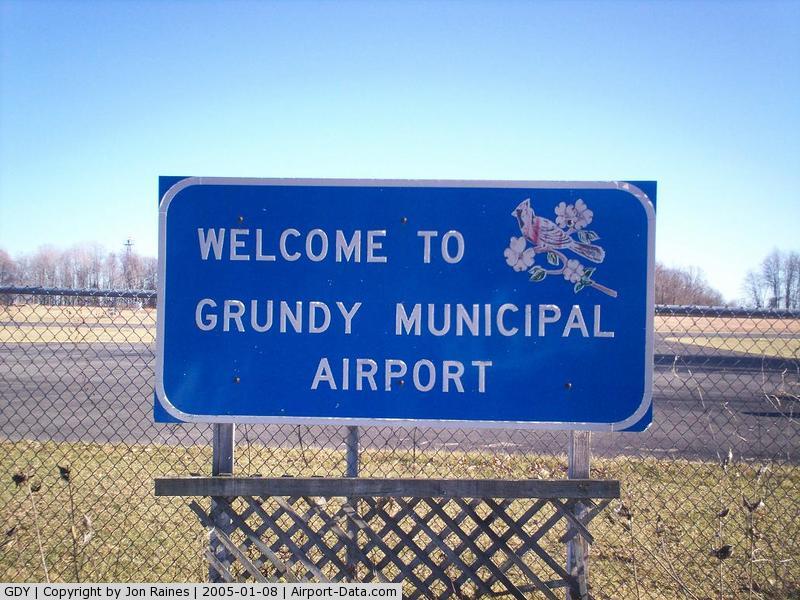
An airport expansion in the southwestern tip of Virginia is being held up due to regulatory red tape regarding the local airport authority's plans to partially finance it by unearthing and selling coal from a seam that runs underneath the project.
Although state regulators had signed off of the project a few years ago, the runway expansion was subject to review from Federal regulators from the Office of Surface Mining. The project reached an impasse when regulators in Washington D.C. determined that the Breaks Regional Airport Authority proposal was in fact a coal mine and would be subject to a much lengthier and costlier permitting process.
Local leaders say the three-year battle with the U.S. Office of Surface Mining over plans to extend the runway at Grundy Municipal Airport has cost taxpayers in this poverty-stricken corner of Appalachia millions of dollars in lost opportunities, and a list of regulatory hurdles remains before construction can even begin.While coal would be recovered from the site the lengthy permitting process is more reminiscent of a permanent mining facility, not one that would see some limited recovery of coal before being converted to another use in short order.
“We were attempting to permit this project as an airport project, not a coal-mining project,” said state Sen. Phillip P. Puckett, a Democrat from Lebanon who has been involved for three years with the effort to lengthen the runway from 2,200 feet to more than 5,000 feet — the length needed to comply with insurance standards for corporate jets. The holdup: Federal regulators have refused to allow the runway project to go forward without a mining permit because of the coal deposits below the land that will be dug up during construction.
“That’s where the permitting process got caught up — in determining whether it was an airport project or a mining project, by the Office of Surface Mining in Washington,” Mr. Puckett said. “We’ve tried to resolve that with them for the last couple of years. We’ve had very little success.”
Regulators contend that a mining permit is needed because local authorities plan to sell the coal dug up in extending the runway to help finance the overall project. The Office of Surface Mining said it “will continue to work with the state, as well as other affected local and federal officials, regarding the best way to proceed with the proposed airport expansion.”
The airport is located in Grundy, VA- a mountainous town of about 1100 people thats also the county seat of Buchanan County in the southwestern tip of Virginia. The Grundy airport was completed in 1969 on land donated to the town by the United Coal Company. Since United Coal had already done surface mining on the land, it was flat enough to build a runway but the additional 2800 feet would require adjacent hills to be levelled. Those hills also contain a fairly rich seam of coal that the Breaks Regional Airport Authority would sell to help offset construction costs. However, since the project was proposed in 2004, the cost of coal has declined dramatically as the airport project has been hampered by delays.
Moreover, attorneys for the town advised that a municipality cannot obtain a mining permit, putting Grundy in a Catch-22 situation. Federal regulators had reportedly relented only after pressure on the US Ofice of Surface Mining from Senator Mark Warner (D- VA). Town officials are getting ready to attempt a 'Plan B' that would involve a permitting process that would involve the Federal Aviation Administration as the primary agency. However, even if it is reclassified as a construction project, the airport expansion requires approval from the Environmental Protection Agency and US Army Corps of Engineers- two agencies that have halted scores of projects in coal country in recent years.
Currently, Grundy and Buchanan county are accessable by US Route 460 and Virginia Route 83. The nearest airports that can accomodate private jets are in Abingdon, VA while the nearest commercial airports are in Beckley, WV or Johnson City, TN. Although there is a recently completed 1200-acre mixed use business park in Buchanan County, potential investors have to travel at least an hour and a half over narrow, mountainous roads from the nearest airport if they want to see the industrial park for themselves.
It’s important for jets to be able to land and take off from Grundy because, for economic-development prospects — businesses that might locate in the area — air travel is the only efficient way to get there. The 43-year-old facility is the only airport in Buchanan County.As of 2009, Buchanan County was the poorest in the state of Virginia.
“Most of the time, they fly into Abingdon, and you’re talking about [a drive of] an hour and a half, at least,” said Tim Potter, who heads the industrial development authority in Grundy, which is more than 50 miles on mountain roads from the nearest interstate highway. “It’s not convenient.”
Now, Buchanan County has something to show off to visitors: a glittering new 1,200-acre mixed-use business park built on a nearby mountaintop also flattened by mining.
The town, with creative financing and an infusion of federal flood-control dollars, has remade itself as a retail destination. Local economic development officials are hopeful that the business sites they offer will lure more companies to locate in Buchanan County — but first, investors and companies looking to relocate have to see the park.
The region also recieved bad news last month with Bristol, VA-based Alpha Natural Resources announcing the closure of eight mines and layoffs of nearly 10% of the company's workforce. Although a mild winter and increased competition from natural gas have depressed coal prices in the last year or so, President Obama had promised to bankrupt the coal industry and shut down a number of coal-fired power plants.
Wednesday, September 19, 2012
President Obama's Latest Victory in the War on Coal: Virginia-Based Coal Miner Alpha Natural Resources Announces It's Laying Off Nearly 10% Of Its Workforce

Norfolk Southern train seen backing up the Gilbert branch in Wharncliffe, WV to serve the Alpha Natural Resources Premium highwall mine in July 2008. JB Lockard photoBristol, VA-based Alpha Natural Resources [NYSE- ANR] announced on Tuesday that they would be shuttering at least eight mines and laying off approximately 1200 employees- nearly 10% of the company's workforce.
Alpha CEO Kevin Critchfield cited a lack of coal-fired power plants being built in the country and increased regulatory burdens from the EPA on both mining companies and utilities that use coal as contributing to the announced layoffs.
During a 2008 video interview with the San Francisco Chronicle, then-candidate Barack Obama promised to bankrupt anybody who built a coal-fired power plant in the United States. He also promised that energy prices would 'neccesarily skyrocket' under a cap and trade system that he was in favor of.
In June 2009, the Waxman-Markey Cap And Trade act passed the Democrat-controlled House of Representatives, but never made it to the Senate as both the House and Senate focused on getting 0bamacare passed. However, the White House was able to impose a number of restrictions on utilities and coal-fired power plants by way of regulatory fiat through using the Environmental Protection Agency as its enforcement arm.
The impending Alpha closures will affect at least eight mines in three different states- Virginia, Pennsylvania and West Virginia. Work at those facilities will continue until current contracts are fulfilled.
Spokesman Ted Pile says the affected West Virginia operations are the Alloy deep mine near Powellton, the Alloy surface mine near Boomer, the Premium highwall mine near Gilbert and the White Flame Surface Mine near Wharncliffe.With the EPA regulations in place and no new coal-fired power plants being built, many companies have shifted from mining thermal coal typically burned at power plants to produce electricity to metallurgic coal which is in demand for steelmaking overseas.
The Virginia mines are Guest Mountain deep mines No. 8 and No. 9 near Norton, and Twin Star Surface Mine near Hurley.
In Pennsylvania, Alpha will close its Dora deep mine in Jefferson County.
In June of 2011, Alpha had acquired competitor Massey Energy in a deal worth $7.1 billion. Some of the facilities being closed down include former Massey properties.
Alpha isn't the only coal mining company that has been struggling in the current economic and regulatory environment. In July of this year, Patriot Coal had filed for bankruptcy protection thanks in part to a weaker economy, cancelled contracts as well as the same hostile regulatory environment. Out west, environmentalists have rallied and attempted to obstruct coal trains and export terminals from even passing through their cities- even filing nuisance lawsuits against railroads over diesel exhaust and coal dust.
Saturday, June 30, 2012
Long Overdue Iron Horse Update- Pan-Am, MM&A Look To Oil By Rail; Fatal Wreck in Oklahoma; Centennial Steam to the South Rim of Grand Canyon; Susquehanna Gets Oakway Rebuilds; Ambitous WV Tourist Train Project Proposed

Montreal, Maine & Atlantic SD40-2 #758 leads a motley assortment of EMD and GE diesels east through Frontenac, Quebec with unit crude oil train 606-245 on June 8, 2012. The train is bound for the New Brunswick Southern railroad interchange at Brownville Jct, ME. Frank Jolin photo via railpictures.netNEW BRUNSWICK- Canada's largest oil refinery is looking to bring in shipments of oil from the Bakken shale and that could spell more traffic for some New England railroads depending on what route is selected.
A 104-car test train traversed the 2400 miles between the Dakotas and St John, NB using a BNSF-CSX-Pan Am- New Brunswick Southern route in late May and could provide Maine an economic boost.
The first big shipment was made over the weekend. Each of the 104 cars carried roughly 700 barrels of oil. The train traveled through Chicago to Rotterdam Junction, N.Y., where it moved over Pan Am Railways track through southern and eastern Maine and connected with the New Brunswick Southern Railway for the trip to Saint John.Enviromental groups raised ocbjections over the 100+ car trains traversing enviromentally sensetive areas of Maine- these concerns were punctuated when a Pan-Am local freight derailed in Bucksport, ME in late May sending a pair of tank cars into the Penobscot River before rupturing and leaking a synthetic latex used in papermaking.
Pan Am has been improving its tracks and adding locomotives and crews, making it a player in the growing crude-oil competition, according to Hall.
Pan Am operates one of three possible rail routes that can get crude to Saint John. Canadian National Railroad has another, which skirts Aroostook County and stays north of Maine. A third goes through Jackman, Greenville and Brownville Junction to reach New Brunswick via the Montreal, Maine and Atlantic Railway.
"Irving's going to go with whoever does the best job at the best price," Hall said.
The prospect of steady oil shipments has led Montreal, Maine and Atlantic to announce that it will double the frequency of its service from three to six days a week between Montreal and Brownville Junction said Ed Burkhardt, the company's board chairman.
Price is driving Irving's thirst for Bakken oil, Burkhardt said. Irving's refinery, which has a capacity of 250,000 barrels a day, primarily receives its supply via tankers from Venezuela, the Persian Gulf and the North Sea. But overseas oil now is roughly $20 a barrel more expensive, so it's cost-effective to move some of the supply thousands of miles by rail.
"Rail can land oil at Saint John at a better price than by sea," Burkhardt said.
The most immediate factor that could limit business is the availability of tank cars, which are in great demand nationally, Burkhardt and others say. It takes roughly six days to go from North Dakota to New Brunswick, plus offloading time.
If rail delivery grows, it could help Maine's struggling freight railroads and the shippers that depend on them, said Chop Hardenbergh, editor of Atlantic Northeast Rails & Ports. That could help improve service to Maine's paper mills and attract new shippers, he said.
"It certainly helps our railroads and our overall economy," Hardenbergh said.
Montreal, Maine & Atlantic began running test trains to the St John's refinery shortly after striking Canadian Pacific employees were ordered back to work, thus enabling MM&A to interchange with railroads west of St Jean, Quebec.
Both the Pan-Am and MM&A hand off the unit oil trains to the New Brunswick Southern- either at Brownville Jct or Northern Maine Jct. Irving's St John's refinery is also reportedly eyeing an all-Canadian National route between the Saskatchewan portion of the Bakken and New Brunswick. The New Brunswick Southern and Irving oil refinery are both owned by J.D. Irving, LTD- a privately held company.

NTSB investigators are combing the scene and interviewing Zurita to attempt to piece together what had happened. The signals along the line and brakes on the locomotives involved were in working order and no cell phones were found at the crash site. Some experts have speculated that human error- not neccesarily on the part of the crew- could've played a part in the collision.
The NTSB will also be investigating the event recorders- basically a locomotive's black box- before issuing a preliminary report in two weeks.

Grand Canyon 2-8-2 #4960 leads Santa Fe 4-8-4 #3751 on a steam doubleheader to the South Rim of the Grand Canyon outside of Williams, AZ on May 15, 2012.
ARIZONA- The San Bernardino Railroad Historical Society's restored Santa Fe 4-8-8 Northern #3751 powered an excursion from Los Angeles to the South Rim of Arizona's Grand Canyon National Park in May to mark the centennial of statehood for Arizona.
The train departed Los Angeles on May 14th and after making good time over Cajon Pass and to the massive former Santa Fe yard and depot in Barstow, CA proceeded east on the transcontinental mainline to the Arizona & California interchange at Cadiz, where it ran into some problems in the form of a 15 MPH slow order for the journey between Cadiz and the ARZC facilities in Parker. Continuing east to the junction with the BNSF 'Peavine' line at Wickenburg, AZ the following day, the #3751 and its Amtrak diesel helper trudged along under another slow order, eventually making its way onto the Peavine Line north of Wickenburg and stopping to take on water at the siding in Congress, AZ.

Santa Fe #3751 seen heading southbound across the Hell's Canyon Trestle on BNSF's Phoenix-Williams, AZ 'Peavine' line at Drake AZ on the return trip to Los Angeles on May 18, 2012The special arrived in Williams, AZ well after dark on the second day, but the following morning it left Williams on time while paired up with Grand Canyon's waste vegetable oil-burning 2-8-2 Mikado #4960.
Although used sparingly by Grand Canyon Railway's parent company Xanterra, the former Chicago, Burlington & Quincy Mikado has already made a couple of trips this year including a Valentine's Day special where visitors could ride to the South Rim for 1912 prices to celebrate Arizona's Centennial.
After a day off, the #3751 began its return trip to Los Angeles with the Grand Canyon Limited on May 18, giving riders a rare mileage trip down the former Santa Fe freight line in daylight hours. Keeping close to its schedule, the #3751 took on water in Congress, AZ once again and made better time over the ARZC line between Wickenburg and Parker, AZ as the speed limit had been raised to 35 MPH for the return trip. The following day, the #3751 made much better time to the BNSF Transcon junction at Cadiz and had a relatively easy journey back to Los Angeles via Barstow and Cajon Pass.

Newly arrived Susquehanna SD60 #3810 seen leading westbound Little Ferry, NJ to Binghamton NY symbol freight SU-99 through Bogota, NJ on June 22nd, 2012. Brandon Kaback photo via rrpicturesarchives
NEW YORK, SUSQUEHANNA & WESTERN- The Susquehanna has recently taken delivery of six former Oakway SD60 that were extensively rebuilt by Paducah, KY-based VMV Paducahbuilt. In addition to major overhauls of the trucks, fans, wheels and prime movers, Eastern Railroad News is reporting that the units will be equipped with GPS tracking and a new AESS Fuel Management system. The units were built in the late 1980s for Oakway leasing and spent much of their service lives in freight service on the Burlington Northern and BNSF.
Although there were earlier reports circulating that one of the six EMDs would be adorned with a maroon and silver paint scheme reminiscent of the colors on Susquehanna's early ALCo diesels, it apprears as though all six will be delivered in the NYSW's contemporary 'Yellowjacket' scheme. Per Susquehanna tradition, the units will be assigned road numbers 3800 to 3810- even numbers only.
Previously, the Susquehanna had been utilizing older SD40T-2s and unrebuilt SD45s and a fleet of leased blue CEFX SD40M-2s to handle the heavier road freights between Little Ferry, NJ and Binghamton, NY. The NYSW is also reportedly evaluating four-axle gensets for local and yard service.

The Durbin & Greenbrier Valley's former Moore & Keppel 2-truck Climax is seen leading a mixed train at Durbin, WV in May 2010. The line is currently isolated from other railroads, but a plan is in place to reconnect both the Durbin & Greenbrier and Cass Scenic with the rest of the nation's rail network via the West Virginia Central. Kevin Madore photo via Railpictures.netWEST VIRGINIA- Randolph County could soon become the lynchpin of an ambitious 90-mile tourist and heritage railroad circuit in the eastern part of the Mountaineer State. The county seat of Elkins is already home to the West Virginia Central's New Tygart Flyer and Cheat Mountain Salamander excursion trains. In 1997, the WVCR was selected by the state of West Virginia to operate 140 miles of former Western Maryland lines that CSX was looking to abandon. Besides a number of excursion services, the WVCR also hauls scrap metal and lumber for shippers in some of the isolated communities along the line. Prior to 1985, the south end of the line connected with the Cass Scenic Railroad south of Durbin, WV but the line was washed out in a flood 27 years ago.
The WVCR is also afilliated with the Durbin Rocket in nearby Pocohontas County. The Rocket is on an isolated 5-mile stretch of former Cheseapeke & Ohio line and offers short excursions and weekend stays in the wilderness in a caboose.
However, according to recent reports in the Elkins Inter-Mountain a proposal is being put before local Chambers of Commerce to restore WVCR's connections with both the Durbin Rocket and the Cass Scenic by rebuilding bridges and re-laying rail that would be ripped up from the dormant southwesternmost portion of the WVCR line between Laurel Bank and Bergoo, WV.
The project would add 60 miles of new rail trail, creating the Highland Adventure of Mountain & Rail, a 90-mile loop connecting Canaan Valley in Tucker County with The Greenbrier Resort, and Belington with Cass Scenic Railroad in Pocohantas County, Bergoo in Webster County and Snowshoe Resort.The plan coincides with the announcement of the West Virginia Railroad Museum selecting the nearby town of Beverly, WV for its new permanent home. The WVRM had originally planned to set up shop in Elkins, but was unable to meet planning requirements because the town's former Western Maryland depot wasn't big enough and the yard facilities couldn't accomodate the Museum's 90ft turntable. The Beverly site also features a historic former WM depot and is less than 10 miles away from Elkins.
"The goal is to have the trains load and unload in Belington," said Smith.
There could be economic benefits to all counties involved, combining recreation with transportation. Those with canoes, for instance, could go canoeing at one location, board a train, and canoe at another location in the same day.
"We think (the rail project) will open many new opportunities because of this plan," said Byrne.
The Highland Adventure of Mountain & Rail could result in the expansion of existing recreational opportunities in the area as well as provide an opportunity for others.
The project would cost about $20 million and is expected to attract 150,000 tourists in its first year, bringing a $50 million economic impact. In 2011, Smith's railroad had 35,998 passengers.
"With the new rail system, even West Virginia residents will have more places to go," said Byrne.
Many of the trains will travel through scenic areas of the state and provide the opportunity for many to merge their train rides with other recreational activities such as rafting, camping, hiking and more.
Once moved into their permanent home, the West Virginia Railroad Museum plans on restoring some of their rolling stock to working order, including a pair of former West Virginia Northern 2-8-0 Consolidations, a 1943-built former US Army Baldwin diesel and a 1941-built Heisler geared steam locomotive- similar to the Durbin & Greenbrier's geared climax steam locomotive. This could provide an opportunity for the Museum's motive power to haul excursions on any of the three railways.

Coos Bay Rail Link leads a Eugene-bound train across a trestle at Hauser, OR on 2/23/12. The recently-reopened rail line has been mentioned as hosting unit coal trains bound for export from a facility to be built at the port of Coos Bay. Shane Gill photo via rrpicturearchives.net.OREGON- In remarks at a 'green' energy conference at Portland, Oregon's Democrat governor has called for a 'sweeping review' by state and federal agencies of a number or proposed coal export terminals located throughout the Pacific northwest.
Kitzhaber, a Democrat with strong ties to environmental groups that oppose coal export, requested the comprehensive review in a letter Wednesday to the Bureau of Land Management and the Army Corps of Engineers today. He also called for the review in a broader speech on "clean energy" today before the Future Energy Conference in Portland.The proposed coal terminals and upgrading the rail lines that would serve them would create much-needed jobs for rural Oregon- the statewide unemployment rate currently is 8.4%. Kitzhaber likely ordered the review to make certain the coal terminal proposals would die a slow death via red tape and regulations rather go on the record as nixing the projects outright. Rural Oregon's economy has been struggling decades before the 2008 subprime lending meltdown triggered a global recession- with their timber industry coming under increasingly strict regulations due to pressure from environmentalists.
“We’re rushing to this huge infrastructure investment without a full national discussion,” Kitzhaber said after the speech. “I think we deserve to have a full debate on this.”
Kitzhaber didn't take a stand for or against exporting coal, which supporters say would increase rural jobs and tax revenues.
The coal would come from the Powder River basin and be shipped via Union Pacific or BNSF to one of the proposed terminals. With half the sites under consideration, the coal trains would have to be handed off to another railway to reach the port. Among the possible terminal locations are Bellingham, Longview and Grays Harbor in Washington state and Coos Bay, Port Westward and Morrow in Oregon. Located much further inland along the Columbia river, Morrow is a realtively short distance away from Union Pacific's yard in Hinkle, OR while any trains using Coos Bay would utilize the newly re-opened rail line between Coos Bay and Eugene. Just west of Portland, Port Westward would utilize Genesee & Wyoming's Wilamette & Pacific railroad while the Grays Harbor proposal would utilize Rail America's Puget Sound & Pacific.
The proposals have met with fierce opposition from environmentalists who are now claiming that coal trains can cause cancer or something. I shit you not- the very same environmentalists who hadn't said a word about train loads of trash being taken from metropolitan areas in the Pacific northwest and being dumped in eastern Oregon and Washington for the last 25 years are now warning the public on the health risks of dust blowing off from passing coal trains.
Meanwhile, Coos Bay Rail Link has obtained two GP38 locomotives to handle an expected increase in traffic as track rehabilitation slated for this summer will lead to increased train speeds between Coquille, OR and Eugene. A number of local companies were awarded contracts for weed abatement, bridge repair and tie replacement along the 134-mile route.
Thursday, June 21, 2012
Democrats Skipping National Convention, Seek to Distance Themselves From Obama
At least a half dozen elected Democrats announced that they will not be attending the party's upcoming national Convention at Charlotte, NC in September.
The latest no-shows who made the announcement came from two incumbent Representatives from Upstate New York who are trying to get re-elected in competitive districts.
Congressman Bill Owens [D- NY23] and Kathy Hochul [D- NY26] announced separately that they would be spending time in their respective districts and with their campaigns in lieu of attending the party's gathering in the Tarheel state. The two upstate Democrats' announced their decision a day after Pennsylvania Congressman [D- PA12] told the Pittsburgh Tribune-Review that he would be campaigning in lieu of attending the DNC's convention this September. The April Keystone state primary pitted two Democrat incumbents- Critz and Jason Altmire [D- PA4]- against each other to vie for the newly-redrawn congressional district. Critz fended off the challenge from Altmire by winning they newly-formed district's primary by a 52% margin.
Critz, Owens and Hochul each came into office during closely contested special elections since 2009 and all three of them are facing spirited challenges from Republican opposition in their districts, leading many to observe that they're distancing themselves from President Obama for their 2012 campaigns.
Meanwhile, the Democrat delegation from the Mountain State will be under-represented as Democrat governor Earl Ray Tomblin, US Senator Joe Manchin and Congressman Nick Rahall [D- WV3] all announced they would be skipping out on the DNC convention. The three West Virginia Democrats have criticized Obama's energy policies as effectively bankrupting the coal-producing state. Under the Obama Administration, the EPA has ordered the shutdown of dozens of coal-fired power plants and during the closing days of the 2008 Presidential campaign, Obama had promised that energy prices would skyrocket while he would bankrupt the coal industry.
Critz, Manchin, Tomblin and Rahall all represent coal producing regions while Owens and Hochul's districts could benefit from natural gas exploration on the Marcellus shale should New York state ever lift a moratorium on hyrdo-fracking. Despite being abundant and domestically available energy sources, President Obama, the Democrats and their environmentalist backers have demonstrated an inherent antipathy towards fossil fuels- including coal and natural gas- as a cornerstone of their energy policy.
In late May, prominent Democrats such as former Pennsylvania governor Ed Rendell, Newark, NJ mayor Corey Booker and Massachusetts governor DeVal Patrick were rebuked by the White House after they were critical of the Obama campaign's attacks on private equity firm Bain Capital as a means of going after presumptive GOP nominee Mitt Romney.
The convention venue itself is a point of contention among some Democrats. Although North Carolina is a right-to-work state, local officials agreed to outsource some labor contracts to out-of-state union shops. Last month, Tarheel state voters approved an amendment to the state's constitution that would define marriage as between a man and a woman. The move draw ire from the gay community, who had unsuccessfully petitioned the DNC to change venues.
The latest no-shows who made the announcement came from two incumbent Representatives from Upstate New York who are trying to get re-elected in competitive districts.
Congressman Bill Owens [D- NY23] and Kathy Hochul [D- NY26] announced separately that they would be spending time in their respective districts and with their campaigns in lieu of attending the party's gathering in the Tarheel state. The two upstate Democrats' announced their decision a day after Pennsylvania Congressman [D- PA12] told the Pittsburgh Tribune-Review that he would be campaigning in lieu of attending the DNC's convention this September. The April Keystone state primary pitted two Democrat incumbents- Critz and Jason Altmire [D- PA4]- against each other to vie for the newly-redrawn congressional district. Critz fended off the challenge from Altmire by winning they newly-formed district's primary by a 52% margin.
Critz, Owens and Hochul each came into office during closely contested special elections since 2009 and all three of them are facing spirited challenges from Republican opposition in their districts, leading many to observe that they're distancing themselves from President Obama for their 2012 campaigns.
Meanwhile, the Democrat delegation from the Mountain State will be under-represented as Democrat governor Earl Ray Tomblin, US Senator Joe Manchin and Congressman Nick Rahall [D- WV3] all announced they would be skipping out on the DNC convention. The three West Virginia Democrats have criticized Obama's energy policies as effectively bankrupting the coal-producing state. Under the Obama Administration, the EPA has ordered the shutdown of dozens of coal-fired power plants and during the closing days of the 2008 Presidential campaign, Obama had promised that energy prices would skyrocket while he would bankrupt the coal industry.
Critz, Manchin, Tomblin and Rahall all represent coal producing regions while Owens and Hochul's districts could benefit from natural gas exploration on the Marcellus shale should New York state ever lift a moratorium on hyrdo-fracking. Despite being abundant and domestically available energy sources, President Obama, the Democrats and their environmentalist backers have demonstrated an inherent antipathy towards fossil fuels- including coal and natural gas- as a cornerstone of their energy policy.
In late May, prominent Democrats such as former Pennsylvania governor Ed Rendell, Newark, NJ mayor Corey Booker and Massachusetts governor DeVal Patrick were rebuked by the White House after they were critical of the Obama campaign's attacks on private equity firm Bain Capital as a means of going after presumptive GOP nominee Mitt Romney.
The convention venue itself is a point of contention among some Democrats. Although North Carolina is a right-to-work state, local officials agreed to outsource some labor contracts to out-of-state union shops. Last month, Tarheel state voters approved an amendment to the state's constitution that would define marriage as between a man and a woman. The move draw ire from the gay community, who had unsuccessfully petitioned the DNC to change venues.
Thursday, March 31, 2011
Iron Horse Roundup For March 2011- China's High Speed Graft Problem; BNSF Crew Killed in Shuttle Wreck; Southern Consolidated Returns to Steam

Railpictures.net photo- Yu MingCHINA: A series of internal government audits have found that China's much-vaunted high speed rail projects have been plagued by corruption, embezzlement, misappropriations and cost overruns, China's National Audit Office announced on Wednesday.
China’s state audit office said on Wednesday it had identified numerous cases of embezzlement and other irregularities from just a three-month period of construction on the Beijing-Shanghai high-speed line last year and has passed the cases on to judicial authorities for formal investigation.
China’s railway minister and the rail ministry’s deputy chief engineer were both removed from their positions last month for “severe disciplinary violations” — an allegation that usually results in criminal charges for corruption.
The former minister, Liu Zhijun, is the most senior government official to be implicated in corruption in the past five years and his downfall has raised doubts about the future of the hugely ambitious high-speed rail expansion plans he championed. Neither Mr Liu nor Zhang Shuguang, the former deputy chief engineer at the rail ministry, have been named in connection with the state auditor’s investigation into the 1,318km, $33 billion Beijing-Shanghai high-speed rail project, which is scheduled to open to the public next year.
The line is the longest and most expensive high-speed rail project in the country but it has been dogged by scandals and controversies and singled out in previous state audits for financial “irregularities”. In its latest report the auditor also cited numerous cases of flawed procurement procedures, overcharging, unexplained costs and fake receipts related to the project.
An intense safety review of all projects is under way because of fears that corruption and the speed with which the network has been built will result in poor quality tracks that are meant to carry trains travelling at up to 380 km/h

Chinese High Speed Rail Attendants- Xinhua PhotoAccording to the state-run Xinhua News Agency, auditors say that embezzlers made off with the equivalent of $28.5 million for just the Beijing-Shanghai high speed rail project.
As a matter of personal opinion, I think this stands out as a cautionary tale over pinning any sort of long term economic recovery on numerous massive public works projects that would make the Big Dig look well run and fiscally responsible in comparison. It doesn't help that some of the politicians who are the most enthusiastic backers of high-speed rail here in the USA also backed things like TARP, the Stimulus or various government bailouts and have demonstrated zero appreciation for the massive costs involved in building and maintaining a dedicated high speed line.

Photo- Bill Wagner/Longview Daily NewsWASHINGTON: Two BNSF Employees and a shuttle driver were killed while a fourth BNSF worker was in critical condition after a BNSF grain train collided with the shuttle van carrying them on March 24th in Longview, WA.
58 year old engineer Tom Kenny, 28 year old conductor trainee Christopher Loehr- both based out of Seattle- and 52 year old Dwight Hauk of Auburn, WA were being picked up by 60 year old shuttle driver Steven Sebastian and take to Vancouver, WA after their shifts when they were struck by the train.
The crossing is a remote, private crossing with no lights or arms that lower and raise on a train's approach. Instead, the crossing features a warning signs on top of a stop sign.

Railpictures.net- John HigginsonTENNESSEE: For the first time in 21 years, Southern Railway 2-8-0 consolidated #630 is under steam. The Tennessee Valley Railroad Museum spent the better part of a decade restoring the 1904-built ALCo to working order, with break-in runs taking place over the last weekend of March 2011.
Almost as noteworthy as the fact that the 2-8-0 is up and running once again is the fact that news of #630's revival was announced on Norfolk Southern's official Twitter page and a short video of the #630 being fired up on the company's official YouTube account. Norfolk Southern had announced last year that it would begin a partial revival of its steam program, using historic equipment form the Tennessee Valley Railroad Museum.

Ermelo in happier, more derailment-free times- Eugene Armer photoSOUTH AFRICA: A derailment on the Transnet line between Ermelo and Richards Bay in the northeastern corner of South Africa is expected to slow coal exports.
The accident, which occurred on Wednesday near Ermelo in South Africa's northeastern Mpumalanga province, is likely to add pressure on South African coal producers, already struggling to export all their coal due to bottlenecks on the rail lines.
Spokesman Sandile Simelane said one of the two lines would reopen on Friday but could not confirm when the other would reopen.
"We anticipate one of the lines to reopen tomorrow," he told Reuters, adding that an investigation into the cause of the derailment was ongoing.
He declined to comment on how much tonnage would be lost as a result of the derailment. Besides the immediate impact, it also means trains have to be rerouted, causing further disruption to the transport of coal.
South Africa is a major exporter of coal to power stations in Europe and Asia, but exporters have failed to ship all of their product because of bottlenecks on the lines approaching the huge Richards Bay Coal Terminal.
South Africa exported 63.43 million tonnes of coal last year, boosted by demand from China and India, but far below the terminal's expanded capacity of 91 million tonnes.
Industry representatives have said South Africa was unlikely to export 60 million tonnes this year due to frequent problems on the line.
Transnet is investing heavily in new and improved infrastructure, but it will take years before a substantial increase in transported tonnages is seen.
Monday, January 31, 2011
Today's Train of Thought- Yellow Streak, Jan 31 2011

Today's train of thought brings us a little splash of color in a wintry Appalachia, as railpictures.net contributor J.B. Lockard catches armour yellow Union Pacific C40-8 leading a Norfolk Southern SD50 still in Conrail paint. The visitor from out west is in charge of Norfolk Southern's Middletown, OH to Williamson, WV coal empties train 81Z on Pocahontas Division at Glen Alum, WV on December 27, 2010.
The leased yellow Dash 8s from out west had been making a number of appearances on Norfolk Southern's lines across the Mountaineer State, breaking up the monochrome of NS's own black and white 'Thoroughbred' paint scheme.
Saturday, January 15, 2011
Today's Train of Thought- SD70MAC Attack Up North, January 15, 2011.
 Even though Alaska is by far the biggest state in the Union, big trains are something of a rarity in the Big Dipper State, as the Alaska Railroad is isolated and disconnected from the rest of the rail network in the USA and Canada.
The link is provided instead by rail barges between Seattle, WA- where the cars are interchanged with BNSF or Union Pacific- or Prince Rupert, BC where the cars are interchanged with the Canadian National Railway.
The barges can typically accomodate anywhere from 40-55 cars each, but there are intra-line unit coal trains that can measure 75 cars in length. Although some of this coal is bound for on line customers like Fort Wainright, University of Alaska-Fairbanks or Eileson AFB, a good deal of the coal (mined at Healy, AK) travels to port at Seward where it is loaded onto ships for export to South Korea or Chile.
Railpictures.net photographer (and Alaska Railroad employee) David Blaze explains that on December 10, 2010, one of these 75 car trains was in the middle of unloading at Seward, but had to stop halfway through because of high winds. The train ended up leaving with 4 units and half of it's consist. The following day, another coal train showed up at Seward and was able to successfully offload its coal along with the other half of the train that had to stop on account of the wind.
For the return trip to Anchorage, the consist was successfully doubled up on December 12th, resulting in a 10 unit, 113 car, 7000 ft behemoth of a train- essentially 1½ trains. Here, David Blaze catches SD70MAC #4016 in charge of nine other EMD Behemoths as it snakes its way northward around the Turnagain Arm at Indian, AK on December 12, 2010.
Sunday, December 12, 2010
NZ Police: All 29 Trapped Miners Feared Dead

Image- NZHerald
A second, more powerful blast rocked the Pike River Coal mine on New Zealand's South Island on Nov. 24th where 29 miners had been trapped since an initial blast on the afternoon of November 19. Police superintendent Gary Knowles said that there was no chance any of the trapped men could've survived the second blast, which lasted for as long as 30 seconds.
A third and fourth blast a few days later was strong enough to ignite the coal in the mine, further damaging the mine's already crippled ventilation system and setting some of the nearby vegetation above-ground on fire. The most recent development is that the damaged ventialtion system has been capped, which will allow the GAG unit brought in from Australia (basically a jet engine designed to supress underground coal fires) to work more efficiently.
On Friday, Dec 10th, as police announced that they would hand over recovery operation to Pike River Coal management, the company said layoffs for most of the 90 remaining full time staff were likely by next month.
With the well-deserved jubilation surrounding the successful rescue of the 33 miners in Chile, this comes as a particularly harsh kick in the gut. Perhaps most tragic was the story of 17 year old Joseph Dunbar, who was eager to start his new job at Pike River and was among those trapped in the intial blast on his first day.
The 29 miners have been identified as:
Conrad Adams, 43 (Greymouth)
Malcolm Campbell, 25 (Greymouth - Scottish)
Glen Cruse, 35 (Cobden)
Allan Dixon, 59 (Runanga)
Zen Drew, 21 (Greymouth)
Christopher Duggan, 31 (Greymouth)
Joseph Dunbar, 17 (Greymouth)
John Hale, 45 (Ruatapu)
Daniel Herk, 36 (Runanga)
David Hoggart, 33 (Foxton)
Richard Holling, 41 (Blackball)
Andrew Hurren, 32 (Greymouth)
Jacobus 'Koos' Jonker, 47 (Coben - South African)
William Joynson, 49 (Dunollie - Australian)
Riki Keane, 28 (Greymouth)
Terry Kitchin, 41 (Runanga)
Samuel Mackie, 26 (Greymouth)
Francis Marden, 42 (Runanga)
Michael Monk, 23 (Greymouth)
Stuart Mudge, 31 (Runanga)
Kane Nieper, 33 (Greymouth)
Peter O'Neill, 55 (Runanga)
Milton Osborne, 54 (Ngahere)
Brendon Palmer, 27 (Cobden)
Benjamin Rockhouse, 21 (Greymouth)
Peter Rodger, 40 (Greymouth - British)
Blair Sims, 28 (Greymouth)
Joshua Ufer 25 (Australia)
Keith Valli, 62 (Winton)
Saturday, July 3, 2010
Crazy Wingnut Extremist Tea Baggers: "Feds Put Southern Louisiana Out of Work" and "People Are Dying Down Here!"
And by 'right wing extremist Tea Baggers', I mean former Clinton political strategist James Carville.
Not to be out done in the crazy wingnut department is Ravi Sangisetty, a Congressional candidate for Louisiana's third district with a scathing rebuke of the Obama administration's moratorium on offshore drilling.
HOUMA, La. — Ravi Sangisetty, candidate for U.S. Congress in the Louisiana Third District, said the federal government has issued a death sentence to South Louisiana’s economy.
“Last night the President went on TV and said, ‘If something isn’t working, we want to hear about it,’” Sangisetty said. “Well, because of the federal government and BP, the list of things that aren’t working is pretty long. The federal government’s moratorium means the oil rigs aren’t working; failure to regulate BP means now the Gulf is full of oil; the oil means the fishermen aren’t working; that means our restaurants and tourism industries aren’t working. Mr. President, the federal government stopped South Louisiana from working.”
Sangisetty said that safety must be ensured on the deepwater rigs in a matter of days, not months. He also said that domestic oil is key to our national economy and security.
“The President chastised America for sending a billion dollars a day to foreign countries for their oil,” Sangisetty said. “Domestic oil is a perfect way to counter that, however our ability to drill our own oil has been crippled because Washington is broken. We have a serious problem down here. We need a solution for coastal economy that puts South Louisiana back to work now.”
Did I mention that Sangisetty is a Democrat? And that I agree with him? For some reason, Sangisetty is not running on the 'Obama-is-responding-to-the-BP-oil-spill-just-fine-you-stupid-coonasses' platform in 2010 like I suspect the DNC would like him to.
Meanwhile, in West Virginia's long-serving and ethically challenged congressman Alan Mollohan lost a challenge in West Virginia's 1st congressional district primary race to Mike Oliverio back in May. Oliverio- like anybody with some functioning synapses- claims he is against Obamacare, Cap & Trade and the increase of government spending and is none too fond of Nancy Pelosi either.
Oh yes- did I mention he's a democrat, too?
Besides Republican challenger David McKinley, Oliverio faces opposition from 94 year old Ken Hechler, an influential Mountaineer state Democrat who vowed to establish a Political Action Committee with the sole purpose of defeating Oliverio [because nothing says 'bold and refreshing and ready for change' like another 90-something West Virginia democrat!- NANESB!].
West Virginia's 1st district includes Wheeling and the Northern panhandle along with Morgantown and the university of West Virginia- which is coal country and also sits atop the Marcellus Shale natural gas deposits.
Somehow I get the feeling that neither Sangisetty or Oliverio (or their respective districts) would fully embrace a campaign appearance by Obama or Pelosi.
Subscribe to:
Posts (Atom)