Showing posts with label Energy. Show all posts

Wednesday, December 17, 2014

Russia's Rouble Collapsing as Oil Prices in Freefall


As the price of oil plummeted to below $60 a barrel on increased Saudi production, Russia's already sluggish economy took a significant hit when Russia's central bank announced they would increase the key interest rate from 10.5% to 17% in a drastic move announced earlier this week.

The move was done in part to halt the Russian Ruble's drastic slide against the Dollar and Euro- as of Wednesday afternoon, the Ruble was trading at just over 60 to the dollar [down from 68 prior to interest rate hikes- NANESB!] and just under 75 to the Euro.

Although Russia has been on the receiving end of lukewarm sanctions from the USA and European Union after Russia annexed the Crimea and parts of eastern Ukraine, it's apparent that the recently plummeting energy prices have played a role in Russia's latest economic crisis.

This leaves Putin with the difficult choice of trying to prop up the mostly resource-based Russian economy or continue his costly military campaign against the Ukraine [I'm of two minds on this- while I'm glad Putin's finally reeling after attacking a neighboring country unprovoked, let's also keep in mind that no matter how dangerous and belligerent a Kremlin flush with petrodollars was the Eastern Europe, an unstable Russia that feels it has nothing left to lose may end up being more dangerous to the region. Also, who's to say the contagion would be confined exclusively to Russia?- NANESB!].


Over the last several weeks, the implied rationale behind Saudi Arabia's increase in production was that they were attempting to undermine the fracking boom in the US and Canada, temporarily saturating the global market with cheap oil and making the labor intensive practice unprofitable for North American companies. While this strategy would mean the Saudis would lose money in the short-term, they would (in theory) benefit in the long run from reduced competition from oil shale in west Texas and North Dakota.

However, others have theorized that Russia was the intended target of a clandestine Saudi economic attack all along. With President Obama ignoring his own self-declared 'Red Line' in Syria and seeking rapprochement with Iran- despite the Islamic Republic's stated desire to obtain nuclear weapons- the Arabian kingdom has decided to act unilaterally and go after Syria and Iran's benefactor in Russia economically. If that is the case, then undercutting Russia's state-run Gazprom by flooding the global marketplace with cheap oil has proven devastatingly effective so far- moreso than tepid the tepid sanctions levied on Russia after invading the eastern Ukraine.

Whether it's to undercut Russia or the fracking boom in the USA, the Saudi strategy is sure to cause problems among other OPEC members who are just as reliant on oil as Russia and may not be able to ride out low prices like the House of Saud. Even more problematic for some OPEC nations such as Iran and Venezuela is that Russia is their primary benefactor.

The move by Russia's Central Bank comes a little over a month after Russia and China agreed to a lucrative $300B energy deal which would give China's quasi-state run China National Petroleum Corp a partial stake in west Siberian oil and gas fields. In October, China and Russia had signed an agreement to swap nearly $100B of currency, so China may be on the hook as well if the Ruble continues its collapse.

The rate increase has also triggered bickering amid Putin's inner circle and prompted many Russians swarming markets to buy goods before the prices went up.

Wednesday, December 10, 2014

Democrat Senator Mary Landrieu Loses Runoff Campaign to Republican Challegnger Bill Cassidy

Red is for the parishes that Cassidy won while Blue is the parishes that voted for Landrieu. It wasn't even as close as it appears on the map.

The 2014 midterm elections officially wrapped up on Saturday and the Republican party extended their total gains to nine US senate seats when the polls closed in Louisiana for a runoff election for the US Senate seat held by incumbent Mary Landrieu. Observers both inside and outside the Sportsman's Paradise believe the December runoff campaign may not have been necessary if the ballot in the November general election wasn't split between multiple Republican candidates. Last month, both Landrieu and challenger Bill Cassidy failed to get more than 50% of the vote, making last week's runoff necessary.

Sen Landrieu's re-election bid seemed doomed late when she said in an interview shortly before the general election that she stated southern states like her native Louisiana were hostile towards women and minorities. Just days before the runoff voting, she gave a radio interview where she implied the host was illiterate and hung up only part way through when she was facing repeated questioning over her support for 0bamacare.

Nationally, Landrieu was further hurt by the Senate Democrats rejecting a hastily put together bill supporting the KeystoneXL pipeline by a lame-duck session of congress and President Obama's executive order that effectively gave amnesty to more than 5 million illegal immigrants late last month. Offshore drilling and energy exploration in the Gulf of Mexico contributes millions of dollars to Louisiana's economy annually and it's believed that the oil from northern Alberta's Athabasca oil sands that would be carried by the proposed pipeline would end up in a Louisiana refinery.

Senator-elect Cassidy had previously served as a Congressman from Louisiana's 6th district and in the Louisiana's Senate after receiving an MD from the LSU school of Medicine and helped establish the Greater Baton Rouge Community Clinic.

Wednesday, October 22, 2014

Deflated- Environmental Protestors Accidentaly Make Case for Fossil Fuels in Ill-Advised Demonstration

Some of us like staying warm during the winter months. Those of us who don't apparently nag companies about replacing a proven reliable energy source such as coal with renewables like solar or wind.

For instance, a Wisconsin environmental group decided that Madison Gas and Electric [NASDAQ- MGEE] should no longer use coal and instead try to keep people warm through the harsh winter months with unreliable wind, solar or biomass.

To make their case, the set up an inflatable coal plant during a protest in front of the headquarters of Madison Gas & Electric, powered by renewable energy.


As the embedded video shows, the activists couldn't even keep their inflated coal-fired power plant for the duration of the protest with renewable energy. Yet they want Madison Gas and Electric to power southern and central Wisconsin with the same forms of energy that could even keep their prop inflated for fifteen minutes.

While Madison Gas and Electric does utilize wind turbines in Wisconsin and northern Iowa and solar panels in Madison, the company also utilizes both coal and natural gas fired power plants in Portage, Madison and Oak Creek, WI.

Wednesday, September 24, 2014

Scotland Votes to Remain With United Kingdom

Pro-independence supporter shown above

Scotland voted to maintain its 300 year union with Great Britain in a referendum last week that saw 55% of Scottish voters reject a 'Yes' vote to independence.

In an early sign that the nationalists were facing defeat, [pro-independence Scottish politician Alex] Salmond did not attend his local count in Aberdeenshire and instead flew back to Edinburgh by private jet alongside his wife.

Speaking at 6.30am, he accepted the verdict of the people as he conceded defeat in the referendum on Scottish independence.

However, he said that the people of Scotland had only rejected independence “at this stage”, suggesting he believes that another referendum is possible in the future.

With national turnout expected to reach around 85 per cent, Unionists celebrated overwhelming victories in their traditional strongholds such as Orkney, Edinburgh and the Scottish Borders.

Edinburgh voted against independence by 61 per cent to 39 per cent.

Better Together also had huge victories in East Lothian, where they had a 24 per cent lead, Stirling, where they won by 20 per cent, and Midlothian, where the margin of victory was 12 per cent.

A 'Yes' vote would've been devastating to Tory PM David Cameron's government, who had been actively lobbying for unity in the run-up to the vote- Cameron likely would've forever been known as the Prime Minister who oversaw the dissolution of Great Britain while in office.

The Pound Sterling, which had taken a beating ahead of the September 18th balloting, quickly bounced back to 2-year highs versus the Euro before the votes came in.

Once considered a longshot, polls showed that the pro Independence movement was gaining ground in the weeks leading up to the balloting. Pro-independence politicians such as Salmond had promised to use revenue from Scotland's offshore oil reserves in the North Sea to fund schools, healthcare, infrastructure and social programs [loosely modeled after Norway's sovereign wealth fund from their portion of the North Sea oilfields- NANESB] - even though its widely believed that supplies are dwindling. However, even with the declining oil reserves, Scotland has forestry, agriculture, whiskey production and tourism contributing to their economy would be the 14th wealthiest nation per-capita.

Multinational oil firm BP [NYSE- BP] was threatened with nationalization of their Scottish holdings by a Salmond ally should Scotland vote in favor of independence, leading the CEOs of BP and Shell to speak out against Scottish independence.

Sunday, August 24, 2014

Today's Train of Thought- Limited Commercial Interruption, August 24th, 2014


Today's Train of Thought takes us to the Land of 10,000 Lakes- specifically, the gritty commercial, industrial, agricultural and transportation hub that is the Twin Cities.

In this era where seemingly every shortline, regional or industrial switching outfit is affiliated with conglomerates such as Genesee & Wyoming, WATCO or Omnitrax, a shortline operator that doesn't fall under that umbrella is something of a rare find. This is especially true of big-city terminal, transfer or switching roads such as the Minnesota Commercial. Back before there were more than six Class One rail carriers in the United States, the burdensome task of dragging cars from one classification yard to another or switching local industries along the way often fell to entities that jointly owned by the rail carriers serving a given area.

A few such examples exist today- Chicago has the Belt Railway of Chicago, St Louis has the Terminal Railroad Association of St Louis and since 1987, the Twin Cities has had the 150-mile Minnesota Commercial. Going by the MNNR abbreviation, the Minnesota Commercial was the successor to the Minnesota Transfer Railway which was at one time jointly owned by robber barons and fallen flags alike- the Northern Pacific; Chicago, Burlington & Quincy; Milwaukee Road; Chicago & North Western; Rock Island; Soo Line; Chicago & Great Western; Minneapolis & St Louis and Great Northern. By 1970, more than half of these railways would find themselves part of the Chicago & North Western or the newly-formed Burlington Northern. Most of the MNNR's trackage is within Hennepin county and includes numerous spurs, branches and yard tracks. By 1987, when the Minnesota Transfer was reorganized as the Minnesota Commercial Railway, the Rock Island had dissolved and the greatly-truncated Milwaukee Road had been taken over by the Soo Line.

Since the late 1990s, ownership of the MNNR has been more or less divided up between the four remaining Class 1 rail carriers that serve the Twin Cities- BNSF, Canadian National, Canadian Pacific and Union Pacific. The MNNR interchanges with all four of those plus regional Twin Cities and Western in St Paul. The Minnesota Commercial also has something of a following among rail enthusiasts for its tendency to utilize oddball power, such as ALCos, MLWs or rebuilt GEs or EMDs. To this day, a pair of locals serving an industrial park on the north end of the MNNR reportedly utilize a pair of former Green Bay & Western ALCo RS27s.

More recently, the MNNR has moved towards adding older four and six-axle GE roadswitchers onto their roster- including the Santa Fe-rebuilt U36C, reclassified as the SF30C [other examples can be found in Brazil and Mexico- NANESB!]. And like nearby shortlines such as the Wisconsin Northern or St Croix Valley, traffic has heated up in recent years thanks to the oil and gas industry's appetite for frac sand from the upper Mississippi River valley.

Here, Minnesota Commercial SF30C #50 is seen with an MNNR MLW M630 and another 6-axle GE as it charges through the Westminster area of St Paul, MN with more than 100 gondolas of wet sand in tow on the BNSF Midway Sub on May 9th, 2012. According to photographer Brian Kays, the unit sand train also required two B23-7s as mid-train helpers as the Texas bound sand train scaled the line out of the Mississippi River Valley.

Saturday, August 2, 2014

Australia Scraps Carbon Tax

Australia, the twelfth largest economy in the world, has voted to repeal a costly and contentious carbon tax in a 39-32 vote in Australia's senate last month.

The former Labor government, while introducing a price on carbon, said the move would help slash emissions by 160 million metric tons by 2020. It offered voters billions of dollars in compensation through tax breaks and welfare payments for increased costs stemming from one of the most dramatic reforms ever attempted in the energy-reliant economy.

But after the global financial crisis took hold in 2008, followed by the end of a decadelong mining boom in 2012 that slowed growth and employment in the A$1.5 trillion (US$1.4 trillion) economy, Australian voters turned against climate laws—recognized by the International Energy Agency as model legislation for developed countries—blaming them for rising energy bills and living costs.

The World Bank in May produced a State and Trends of Carbon Pricing report counting carbon pricing programs in 40 nations and 20 regions worth a collective US$30 billion, while also singling out repeal plans in Australia as one of the biggest international threats to the rollout of similar programs elsewhere, given its example.

However, implementation of the carbon tax and other emissions laws proved costly for the then-incumbent Labour Party. Former prime-minister Kevin Rudd was unseated in an internal party challenge from Julia Gillard as his approval ratings plummeted due in part to proposed Resource Profits Super Tax which would've levied a tax of no less than 30% on mining companies should their annual profits pass an annual A$75 million threshold.

As leader of the opposition party, Tony Abbot warned the Australian federal government against spending millions of taxpayer dollars for an ad campaign in support of the Carbon Tax in 2011. During the 2013 elections, Abbot campaigned against Labour's carbon tax scheme, saying it increased energy costs and hurt small businesses.

According to 2011 figures from the US Energy Information Administration, Australia is the world's largest exporter of coal and 4th largest exporter of LNG. The demise of the Resource Profits Super Tax also is likely to increase investment and exploration in the Coober Pedy area of the Australian outback, which is believed to hold as much as 200 billion barrels worth of oil according to multiple reports from last year.

Monday, February 24, 2014

Ukrainian President Yanukovych Flees Kiev as Demonstrators Overrun Presidential Compound, Topple Lenin Statues


As anti-government Maidan protestors gained increasing control over parts of the Ukrainian capital of Kiev, President Yanukovych fled his presidential compound to the majority-Russian Crimean port of Sevastopol on Friday.

While Russia denounced the ousters of Kremlin-allied Yanukovych as 'Kalashnikov-toting people in black masks', Ukraine's parliament voted to strip Yanukovych of office and issue a warrant for his arrest in the death of dozens of Maidan protestors in clashes with police last week.

Parliament Speaker Oleksandr Turchinov was named the interim president of the Ukraine while former Prime Minister Yulia Tymoshenko was released from prison and flown to Kiev to address the victorious pro-Western Maidan demonstrators.
Tymoshenko, 53, was freed from prison Saturday after two-and-a-half years, most of them spent in a detention hospital.

Dressed in black, she later emerged at Kiev's Independence Square in a wheel chair. Cheers erupted.

Tearfully, she hailed the sea of protesters, who listened and occasionally waved.

"Today, Ukraine has finished with this terrible dictator," she said, referring to ousted President Viktor Yanukovych.

She then passed on a not-so-subtle message.

"There'll be no Ukraine but the Ukraine you want," she said. "And I'm the guarantor of that Ukraine."

The polarizing former Prime Minister has a complicated relationship with Yanukovych

Both have dominated the nation's politics for years. Both have a rivalry that dates years.

Her international popularity soared a decade ago as a result of her ardent speeches that helped overturn Yanukovych's presidential win in 2004. She's considered a hero of the country's 2004 Orange Revolution, a wave of peaceful protests that swept her and Viktor Yushchenko into power as Prime Minister and President, respectively.

The same revolution successfully overturned what many believed was a largely false presidential win by Yanukovych.

But the promise of the revolution soon turned sour. The two feuded publicly, prompting Yushchenko to fire her a few months into her term.

In 2007, Tymoshenko was back as Prime Minister. But she was dogged by accusations of irregularities and overlooking the nation's economic problems.

Her tense working relation with Yushchenko did not help their case. Analysts say it was one of the reasons she lost to Yanukovych in the 2010 presidential elections.

After Yanukovych won that election, Tymoshenko, was forced out of office and into the courtroom. In 2011, she was on trial over a costly natural gas agreement that she signed with Russia while she was Prime Minister.

In October of that year, a Ukrainian court found her guilty of abuse of authority for signing overpriced gas contracts with Russia and sentenced her to seven years in prison.

The prosecutor said the gas deals inflicted damage to the country amounting to more than 1.5 billion hryvnias (almost $190 million at the exchange rate at the time). In addition to the sentence, the court ruled she must repay the money.

Amnesty International slammed the verdict as "politically motivated" and called for the release of Tymoshenko, who was Prime Minister from January to September 2005, and December 2007 to March 2010.

The case against her was widely considered politically motivated, and the United States and other Western nations called her "a political prisoner."

Both Tymoshenko and Yankukovych have been accused of being oligarchs who have consolidated their power and used the presidential office for personal gain. On Saturday, Maidan demonstrators made their way to Yanukovych's hastily-abandoned presidential mansion. According to watchdog website opendemocracy.net, Yanukovych's presidential salary as the equivalent of US $25,000 per year- yet Yanukovych's mansion in Mezhyhirya is worth an estimated US $75 million and features a private zoo, antique car collection and life-size mock galleon and marina.


Meanwhile, the nationalist Svoboda Party used the collapse of the government to start tearing down statues built to honor Vladmir Lenin that date back to the Cold War- some statues in the eastern and central part of the Ukraine were never torn down with the collapse of the USSR either due to the high Russian population or lingering nostalgia for the old Soviet union by die-hard communists.

Meanwhile, Luxembourg-based steelmaker Arcelor-Mittal [NYSE- MT] announced that they would be removing a Lenin statue and temporarily relocating foreign workers on the grounds of their facility in the Ukraine.

The next round of presidential elections were scheduled to take place in February 2014, but with the ousting of Yanukovych the parliament has now moved election day up to May 25th, 2014.

Russia has said they do not recognize the interim government and there are concerns that the turmoil in the Ukraine will provide Russia with the pretext to change previously negotiated prices for natural gas imported from Russia. Although the Ukraine has sought to diversify its imports of natural gas- as well as exploit their own shale reserves- due to previous disputes with Russia- by early 2014 Energy and Coal minister Eduard Stavytsky said that the Ukraine was importing natural gas almost exclusively from Russia due to a clear price advantage.

Tuesday, January 21, 2014

New York Governor Cuomo- Conservatives Have "No Place in New York"

It's not surprising that Governor Andy Cuomo feels this way- it is a little surprising that Cuomo would be this brash and up-front about his disdain for some of his fellow New Yorkers in an election year.


In an interview with Syracuse PBS affiliate on Friday, Cuomo stated that conservatives have "no place in the state of New York, because that's not who New Yorkers are".

The Republican Party candidates are running against the SAFE Act — it was voted for by moderate Republicans who run the Senate! Their problem is not me and the Democrats; their problem is themselves. Who are they? Are they these extreme conservatives who are right-to-life, pro-assault-weapon, anti-gay? Is that who they are? Because if that’s who they are and they’re the extreme conservatives, they have no place in the state of New York, because that’s not who New Yorkers are.

If they’re moderate Republicans like in the Senate right now, who control the Senate — moderate Republicans have a place in their state.

Shortly after the remarks were made public, Cuomo backtracked and his supporters claimed that his remarks were merely 'taken out of context', instead. Some supporters highlighted Cuomo's qualifier of 'extreme' and pointed out the Governor's praise of 'Moderate' Republicans who have more or less rubber-stamped some or all of Cuomo's agenda. Cuomo attempted to walk back his statements by saying that New Yorkers prefer moderate politicians of either party running for office only a few weeks after avowed socialist and Sandinista supporter Bill DeBlasio was sworn in as mayor of New York City.

By 'anti-gay', Cuomo is apparently referring to anybody who held similar views on same-sex marriage as Pope Francis or President Obama prior to his 2012 re-election campaign. Meanwhile, the NY SAFE Act, a hastily written and almost confiscatory gun law rushed through a closed-door session of the New York state assembly in the immediate aftermath of the December 2012 Newtown, CT school shootings has proven extremely unpopular upstate. Opponents point out the law does nothing to deter crime and makes criminals out of law-abiding citizens who own previously legal firearms while prompting manufacturers and businesses to move out of state because of the increased restrictions.

Another issue that has residents upstate irate at the son of Democratic former governor Mario Cuomo is fracking. New York's Southern Tier sits atop the Marcellus Shale natural gas formation- in fact, the formation is named after the village of Marcellus outside of Syracuse. However, while there has been drilling activity in Pennsylvania, Ohio and West Virginia, Cuomo has dragged his feet on the issue since his 2010 election. Although drilling for natural gas could give the Empire State's economy a shot in the arm- particularly the economically hard-hit Southern Tier- hardline environmentalists and celebrity activists such as Yoko Ono or actor Mark Ruffalo seem to have the ear of Gov Cuomo's office, regaling his staff with liberally embellished horror stories of artificial earthquakes and tap water bursting into flames due to fracking. As the celebrities, environmentalists and wealthy Manhattan progressives do there utmost to ensure that no drilling takes place in New York, upstate counties atop the Marcellus Shale have unemployment rates of around 8%. To his credit, Cuomo floated a compromise where drilling would be confined mostly to the Southern Tier counties of Broome, Chemung, Tioga, Steuben and Chenango but that was quickly overruled by environmentalists. While the Governor and state officials have made no official decision on fracking, observers believe Cuomo and other Democrats are waiting for a more politically opportune time after the 2014 election to make an unpopular decision.

Meanwhile, as landowners in the Southern Tier have been hit with a double whammy of an economy that's been in decline since the 1970s and some of the highest property taxes in the USA, Governor Cuomo has been fundraising in Hollywood- for his re-election bid as governor of New York.

Between the push for same-sex marriage, gun control and abortion while obstructing a surefire means of reviving the Southern Tier's long suffering economy for political expediency, Cuomo's actions as governor have made it abundantly clear that he believes conservatives (or even moderates who disagree with him) have no place in New York. his statements in Friday's PBS interview simply made it official.

[Hat tip- Lonely Conservative; The Mental Recession

Friday, October 25, 2013

What If They Had A Solar Auction and Nobody Came?

In Colorado, you didn't have to imagine. The Denver Business Journal reports that bidders at the nation's first federally-run auction to develop solar projects on public lands were a no-show. And to clarify, I don't mean there were a few internet, telephone or mail-in bids- there were literally ZERO bidders.

To be fair, the Bureau of Land Management had received dozens of inquiries about developing various areas for proposed solar projects, but for whatever reason, none of the interested parties bothered showing up to Thursday's auction.

No bidders showed up for the auction by the federal Bureau of Land Management, which was held Thursday in Lakewood.

“We did not have any bidders come to the sale and we did not receive any sealed bids on the sale,” BLM spokeswoman Vanessa Lacayo said.

“The BLM had received interest in developing the sites, that’s why we moved forward,” she said. “It’s hard to say why we didn’t have any bidders."

In a statement, the BLM said it held the auction because the agency received nine applications and 27 inquiries and expressions of interest after it sought to gauge interest levels from the private sector in March 2013.

The auction offered companies the first chance to bid on the opportunity to file development plans for solar power plants on three parcels in Colorado’s two “Solar Energy Zones” in Conejos and Saguache counties in the sunny San Luis Valley.

While green energy advocates say that the recent government shutdown may have caused uncertainty regarding the auction, recent bankruptcies of solar energy firms such as SunTech, Solyndra, Evergreen Solar or Spectra Watt have likely scared hedge funds and venture capitalists away from the solar companies- despite heavy government subsidies.

Thursday, August 29, 2013

Amid Talk of Privatization, Mexico's State Owned Oil Company Will Start Oil Exploration in the USA


Mexico's state-run oil monopoly, Pemex, confirmed this week their plans to set up a new company to explore for oil and natural gas in the USA and in US territorial waters. Pemex's newly appointed CEO, Emilio Lozoya, said that the unconventional move would help the Mexican oil giant obtain further access to Mexico's domestic supply by introducing it new techniques for offshore drilling and hydraulic fracturing.

The proposal, outlined by Chief Executive Emilio Lozoya in an interview, would push Pemex into complicated drilling techniques where it has no experience. It is a bold move abroad for the inward-looking company, which is the world's fifth-largest crude producer but has never faced competition nor ventured far beyond its borders.

"Pemex will be starting a new company that will work on the shale-gas and shale-oil fields in the U.S. and in the deep-water side of the U.S.," said Mr. Lozoya, a 38-year-old former investment banker tapped last year by Mexican President Enrique Peña Nieto to run the oil giant. "The geology is similar and we can benefit from numerous areas of collaboration with international oil companies."

Potential candidates for Pemex's US energy exploration venture would include Texas' Eagle Ford Shale or New Mexico's Permian Basin- both of which are fairly close to the Mexican border and share a similar topography to northern Mexico.

The announcement comes less than two weeks after Mexican president Enrique Peña Nieto postponed a sweeping bill that would overhaul Pemex and allow foreign investment in the state-run monolith, although Nieto made it a point of stopping short of privatization. The 27th article of Mexico's 1917 Constitution states that all natural resources are deemed property of the state. While Nieto or Mexico's congress are unlikely to revise that part of Mexico's constitution, Pemex could offer foreign companies profit-sharing on various projects as an incentive for foreign investment. However, privatization of Pemex could be viewed as a third rail of Mexican politics.

Pemex was formed in 1938 when then-President Lazaro Cardenas expropriated the assets of all foreign oil and privately-held Mexican companies operating in Mexico. Since expropriation, Mexico has become the sixth largest oil producer in the world. Pemex also has a pension and healthcare system that is independent from the rest of Mexico.

However, in recent years Pemex has been plagued by a number of problems including declining output, theft and sabotage by organized crime, obsolete facilities, deadly accidents, little to no safeguards against pollution and overly generous salaries and benefits to redundant bureaucrats. The entity has traditionally invested in a bloated and heavily entrenched workforce instead of constructing new refineries or modernizing facilities. As recently as 2011, gasoline imports to Mexico were at an all-time high as Pemex sought to expand existing refineries instead of building new ones. Despite high revenues thanks to increased oil costs in recent years, Mexico's federal government traditionally collects between 60% and 70% in taxes and revenues from the oil giant.

Although any degree of privatization of Pemex seems unlikely for now, other state-run oil companies in Latin America have managed to partially privatize while the government remains the majority shareholder. In the mid 1990s, Brazil opened up their oil and natural gas deposits to foreign competition, meaning that the former oil monopoly PetroBras [NYSE- PBR; PBRA] would have to submit competitive bids to the government for subsequent leases while allowing PetroBras to form joint ventures with foreign companies. In 2007, Colombia's EcoPetrol [NYSE- EC] was also partially privatized and shares of the company began selling on the stock exchanges in both Bogota and New York.

Nor would Pemex be the first state-run assets in Mexico that were privatized. In the late 1990s, Mexico opened up their national rail network to privatization- Carols Slim's Grupo Mexico [BMV- GMEXICOB] began operation of FerroMex while Kansas City Southern [NYSE- KSU] entered into a joint venture with Grupo Tranportacion Maratimo Mexicano SAB [BVM- TMMA] to form Transportacion Ferroviaria Mexicana until the KCS bought out TMM's share in 2005. By 1998, Mexico's government had started to privatize their airport system, with publicly traded groups like Grupo Aeroportuario del Centro Norte, S.A.B. de C.V [NYSE- OMAB], Grupo Aeroportuario del Pacifico S.A.B. de CV [NYSE- PAC] and Grupo Aeroportuario del Sureste, SAB de CV [NYSE- ACR] being awarded concessions to operate the airports throughout the country including those in Monterrey, Cancun and Guadalajara.

Tuesday, July 30, 2013

Saudi Prince- US Shale Oil Could Undermine Kingdom, OPEC Nations


A Saudi prince and business investor has warned that the kingdom and other OPEC members that their economies were under a growing threat from the 'fracking revolution' in the USA that has shaken up the energy landscape in recent years.
Prince Alwaleed bin Talal, the country’s best-known global investor, said the business model of Middle East oil exporters risks unravelling rich industrial states find ways of cutting demand. “Our country is facing a threat with the continuation of its near-complete reliance on oil: 92% of the budget for this year depends on oil,” he said in a letter to Saudi oil minister Ali Al-Naimi.

Opec admits that new output from hydraulic “fracking” could chip away its dominant position in the market but the group is more worried about recession in Europe and a hard landing in China.

Prince Alwaleed said oil demand from OECD rich states is in “continuous decline”, and the Saudis will not be able to ratchet up their output from 12.5m to 15m barrels per day (bpd) to cover growing budget costs. “It is necessary to diversify sources of revenue, establish a clear vision, and start implementing it immediately,” he said.

A report last month by Leonardo Maugeri at Harvard University said US shale oil output could triple to 5m bpd by 2017, turning America into the world’s top producer once again.

If shale does deliver on its promise and keeps prices low for decades, it will be a mortal threat to OPEC states that rely on oil revenue to cover social spending and placate fast-growing populations.
Prince Alwaleed was ranked by Forbes magazine as the world's 6th richest man at one point and is most infamous for his comments urging that the United States "should re-examine its policies in the Middle East and adopt a more balanced stance toward the Palestinian cause" just weeks after the September 11th, 2001 terrorist attacks. Then-mayor Rudy Giuliani and other New York officials rejected a $10 million donation from Alwaleed after his remarks.

A trio of Dakota, Missouri Valley & Western units approach the Canadian Pacific interchange in Flaxton, ND as a recently-constructed oil pump works in the foreground in November 2012. Steven M Welch photo.
Hydraulic fracture drilling- also known as hydrofracking or fracking- uses a mix of water and chemically treated sand or 'mud' that's injected into the ground to get to otherwise inaccessible deposits of oil or natural gas. The 'Shale revolution'- as some have called it- has led to the formation of oil boomtowns in North Dakota and breathed new life into Rust Belt towns in Pennsylvania and Ohio. This in turn has led to increased manufacturing for components, mining for 'frac sand' and rail activity moving the supplies into the oilfields and the oil out and to refineries.

Drilling for natural gas in Pennsylvania's Marcellus Shale has become particularly contentious recently, with environmentalists and movie stars weighing in on the purported dangers of fracking to groundwater supplies [although some wells were contaminated decades before fracking began in the area- NANESB!]. A 2012 movie titled Promised Land starring Matt Damon as an energy company representative who has a change of heart after being sent to a struggling Pennsylvania town to secure leases for wells was financed in part by the United Arab Emirates- another OPEC member.

The shale revolution isn't just limited to the United States or Canada, either. Earlier this year, there was a massive oil discovery in Australia's outback while fracking for both natural gas and oil began in Argentina in April. Energy companies believe that Poland may contain central Europe's largest reserves of natural gas, and development of that could reduce Europe's dependence on the Russian energy giant Gazprom. Meanwhile, data from the British Geological Survey indicates that the UK's own shale gas reserves are nearly twice the size of original estimates.

Saturday, March 30, 2013

Natural Gas Begins Flowing To Israel From Offshore Tamar Gas Field


Natural gas from a drilling platform some 90km off the coast of Haifa has started flowing to a processing facility along the Israeli coastal town of Ashdod this weekend.
Israel's Energy Ministry says gas from the offshore Tamar field began flowing for the first time Saturday and would reach a processing facility on Israel's coast by Sunday afternoon.
Long considered empty of natural resources in an otherwise oil-rich part of the world, two massive offshore natural gas fields were discovered off of the Mediterranean coast starting in 2009. The Tamar field, which is being developed by Houston-based Nobel Energy [NYSE- NBL] along with a number of Israeli-based companies, holds an estimated 9 trillion cubic feet of natural gas. Discovered in 2010, the much larger Leviathan Field is said to contain nearly 18 trillion cubic feet of natural gas. In addition to Nobel energy, Australia's Woodside Petroleum [ASX- WPL] is reportedly in negotiations for a 30% stake in developing the Leviathan Field.

The finds could not only help Israel become energy independent over the next several decades, but could make Israel a net exporter of energy once full scale production begins.

The Leviathan field is adjacent to another gas field called the Aphrodite gas field that's been claimed by Cyprus and is also being developed by Nobel energy. During the recent banking crisis, there was talk of the Cypriots approaching the Russians and securing a bailout by collateralizing a percentage of the offshore natural gas deposits. There has also been talk of Israel and Cyprus jointly marketing natural gas to European markets.

Sunday, March 3, 2013

No Major Objections To Proposed Keystone XL Pipeline Project From State Department

In a recently-relesed enviromental review, the US State Department raised no major objections to the construction of the proposed Keystone XL pipeline that would traverse the US/Canada border as it brought oil down from Alberta's tar sands to refineries on the Gulf Coast. However, the lengthy report stops short of reccomending that Calgary-based Transcanada's [NYSE- TRP] 1700 mile pipeline is built.
The lengthy report says Canadian tar sands are likely to be developed, regardless of whether the U.S. approves Keystone XL, which would carry oil from western Canada to refineries in Texas. The pipeline would also travel through Montana, South Dakota, Kansas, Nebraska and Oklahoma.

The report acknowledges that development of tar sands in Alberta would create greenhouse gases but makes clear that other methods to transport the oil -- including rail, trucks and barges -- also pose a risk to the environment.

The State Department analysis for the first time evaluated two options using rail: shipping the oil on trains to existing pipelines or to oil tankers. The report shows that those other methods would release more greenhouse gases that contribute to global warming than the pipeline. The Keystone XL pipeline, according to the report, would release annually the same amount of global warming pollution as 626,000 passenger cars.

A scenario that would move the oil on trains to mostly existing pipelines would release 8 percent more greenhouse gases such as carbon dioxide than Keystone XL. That scenario would not require State Department approval because any new pipelines would not cross the U.S border.

Another alternative that relies mostly on rail to move the oil to the Canadian west coast, where it would be loaded onto oil tankers to the U.S. Gulf Coast, would result in 17 percent more greenhouse gas emissions, the report said.

In both alternatives, the oil would be shipped in rail cars as bitumen, a thick, tar-like substance, rather than as a liquid.
Because the new pipeline would cross the US/Canada border, the decision was initially left up to the State Department. However, the Obama administration initially blocked the pipeline claiming it posed a risk to the environment as it passed through the ecologically sensetive Ogallala Aquifer. The White House has yet to weigh in on an altered route that circumvents the Ogallala Aquifer and Sand Hills region of northern Nebraska.

The Athabasca Oil Sands in northern Alberta are said to be the world's largest known deposit of bitumen oil sands, and have prompted increased interest from China in recent years. As the KeystoneXL project has been held up by years of red tape, bureaucratic foot-dragging and use as a political football, Canada plans on going ahead with a second pipeline run by Enbridge [NYSE- ENB] called the Northern Gateway pipeline that would run from Alberta to British Columbia's Pacific coast where the oil would be exported to China.

Friday, January 25, 2013

Aussie! Aussie Aussie! Oil! Oil! Oil! Massive Outback Oil Find Could Make Australia Leading Energy Producer

Linc Energy Oil Rig in South Australia's Outback
With Australia Day right around the corner, Queensland-based Linc Energy announced a massive shale-oil find in the outback that could put Australia among the top energy producers in the world.
South Australia is sitting on oil potentially worth more than $20 trillion, independent reports claim - enough to turn Australia into a self-sufficient fuel producer.

Brisbane company Linc Energy yesterday released two reports, based on drilling and seismic exploration, estimating the amount of oil in the as yet untapped Arckaringa Basin surrounding Coober Pedy ranging from 3.5 billion to 233 billion barrels of oil.

At the higher end, this would be "several times bigger than all of the oil in Australia", Linc managing director Peter Bond said.

This has the potential to turn Australia from an oil importer to an oil exporter.

"If it comes in the way the reports are suggesting, it could well and truly bring Australia back to (oil) self-sufficiency," Mr Bond said.

State Mineral Resources Development Minister Tom Koutsantonis said there were exciting times ahead for SA's resources industry.

Mr Bond said there was the potential for a US-style "shale oil" boom in SA.

Shale oil extraction involves using new technologies to drill vertically and then horizontally for distances of more than one kilometre through shale rocks that contain oil.

The process was once prohibitively expensive but advances have created a new oil boom in the US.

Mr Koutsantonis said: "We have seen the hugely positive impact shale projects like Bakken and Eagle Ford have had on the US economy.

"There is still a long way to go, but investment in unconventional liquid projects in South Australia will accelerate as more and more companies such as Linc Energy and Altona prove up their resources."

Mr Bond said the potential in SA was "massive", but even at the lower end of estimates - about 3.5 billion barrels - it was still very large.
Shares of Linc Energy [ASX- LNC] soared by more than 30% in trading on the Australian Securities Exchange shortly after the find was announced on Thursday- an 18 month high for the company.

The find is centered around the South Australian outback town of Coober Pedy, which was founded as an opal mining town in 1915. Coober Pedy remains an active opal mining town to this day.

Presently, Australia has been drilling for oil onshore at the Cooper Basin- which straddles the South Australia/Queensland border- since oil and natural gas deposits were discovered in 1961. In addition to offshore projects off the northern coast of Western Australia, oil and natural gas production has taken place at the Amadeus Basin in the Northern Territory since the 1980s.

However, the find at Coober Pedy and South Australia's Arckaringa Basin could easily surpass the output from the oilfields located in the Cooper and Amadeus Basins. While some experts cautioned that the actual number of recoverable barrels of oil may be in the neighborhood of 3 or 4 billion barrels, the news was greeted with considerable fanfare in the Australian press- as even the more pessemistic estimates could still help the Australian economy considerably.

Wednesday, October 24, 2012

More Taxpayer Funded 'Green Energy' Firms File For Bankruptcy

Say what you will about the Obama Administration, at least they're the model of consistency when they try and pick renewable energy winners while playing venture capitalist with other people's money.

No less than two Massachusetts-based 'green energy' companies- one of them touted by President Obama as a Stimulus success story- have filed for bankruptcy last week.

Waltham, MA-based battery manufacturer A123 Systems [NASDAQ- AONE] had filed for Chapter 11 bankruptcy protection on October 16.


The company had gone through nearly $260 million in Federal grants and loans since 2010 as well as another $5 million from the Commonwealth of Massachusetts. The struggling battery manufacturer was supposedly close to a deal worth more than $400 million with China's Wanxian Group [SSE- 600371] but that deal fell through.

Instead, Wisconsin-based Johnson Controls [NYSE- JCI] is bidding to purchase A123's assets including two battery plants in Michigan.

The following day, Boston-based solar inverter company SatCon had filed for Chapter 11 bankruptcy protection. SatCon [NASDAQ- SATC], which primarily markets towards industrial and utility grade photvalic markets, had been awarded two seperate stimulus grants of $3 million each- far less than A123 or Solyndra- but has reportedly used an estimated total of $228,000 from those contracts.

On the other end of the country, officials in the Treasury Department are investigating the financial practices of a solar company run by a bundler for Obama's Presidential campaign.

Elon Musk was hoping to put his San Mateo, CA-based Solar City up for an initial public offering (IPO),but some of the disclosures required by the SEC has garnered the attention of the IRS and Treasury in two seperate probes.
The Internal Revenue Service is auditing SolarCity, the SEC filings reveal, and at the same time the Treasury Department's inspector general is investigating the company. The question at hand: Did President Obama's Treasury Department inappropriately give stimulus money to Musk's company.

Obama's stimulus transformed a long-standing tax credit for renewable energy investment into a direct grant from Treasury, worth 30 percent of a company's investment in a renewable project. Musk's company has applied for approximately $325 million in these stimulus grants, according to the SEC filing.

Treasury found that SolarCity repeatedly overstated the value of its investments, the SEC filings indicate. In those cases, Treasury awarded smaller grants than SolarCity had tried to claim. Now the department's IG and the IRS are doing a broader audit of the projects for which SolarCity and other large solar companies got stimulus cash. Investigators want to know if the companies regularly overstated the value of their investments and thus got overly generous taxpayer grants.
Musk is also the CEO of electric car manufacturer Tesla motors, which recieved grants and low-interest loans from the US government to the tune of $465 million in 2009. Musk has reportedly donated more than $100,000 to President Obama's campaign and alligned PACs as well.

Meanwhile, workers in a Holland, MI plant that made batteries for the Chevy Volt are now saying that there is literally nothing to do but tidy up around the place or play cards as there are no orders for them to work on. The facility, run by South Korea-based LG Chem, has had very little in the way of work since General Motors scaled back production of the hybrid Chevy volt. The new facility, which broke ground in 2010, recieved $151 million in stiumulus funds and reportedly has yet to make a single battery.

Saturday, October 20, 2012

'Coal Mine' Classification of Rural Virginia Airport Expansion Halts County's Economic Development Plan


An airport expansion in the southwestern tip of Virginia is being held up due to regulatory red tape regarding the local airport authority's plans to partially finance it by unearthing and selling coal from a seam that runs underneath the project.

Although state regulators had signed off of the project a few years ago, the runway expansion was subject to review from Federal regulators from the Office of Surface Mining. The project reached an impasse when regulators in Washington D.C. determined that the Breaks Regional Airport Authority proposal was in fact a coal mine and would be subject to a much lengthier and costlier permitting process.
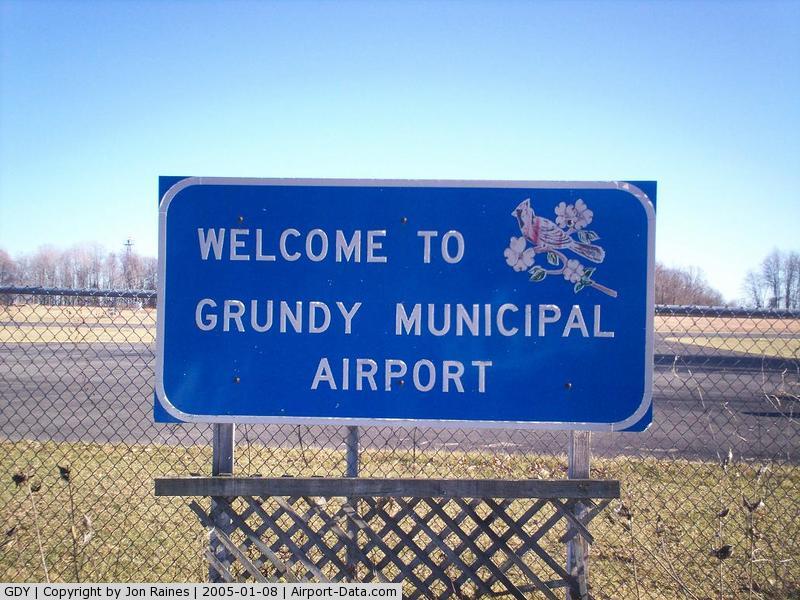
Local leaders say the three-year battle with the U.S. Office of Surface Mining over plans to extend the runway at Grundy Municipal Airport has cost taxpayers in this poverty-stricken corner of Appalachia millions of dollars in lost opportunities, and a list of regulatory hurdles remains before construction can even begin.

“We were attempting to permit this project as an airport project, not a coal-mining project,” said state Sen. Phillip P. Puckett, a Democrat from Lebanon who has been involved for three years with the effort to lengthen the runway from 2,200 feet to more than 5,000 feet — the length needed to comply with insurance standards for corporate jets. The holdup: Federal regulators have refused to allow the runway project to go forward without a mining permit because of the coal deposits below the land that will be dug up during construction.

“That’s where the permitting process got caught up — in determining whether it was an airport project or a mining project, by the Office of Surface Mining in Washington,” Mr. Puckett said. “We’ve tried to resolve that with them for the last couple of years. We’ve had very little success.”

Regulators contend that a mining permit is needed because local authorities plan to sell the coal dug up in extending the runway to help finance the overall project. The Office of Surface Mining said it “will continue to work with the state, as well as other affected local and federal officials, regarding the best way to proceed with the proposed airport expansion.”
While coal would be recovered from the site the lengthy permitting process is more reminiscent of a permanent mining facility, not one that would see some limited recovery of coal before being converted to another use in short order.

The airport is located in Grundy, VA- a mountainous town of about 1100 people thats also the county seat of Buchanan County in the southwestern tip of Virginia. The Grundy airport was completed in 1969 on land donated to the town by the United Coal Company. Since United Coal had already done surface mining on the land, it was flat enough to build a runway but the additional 2800 feet would require adjacent hills to be levelled. Those hills also contain a fairly rich seam of coal that the Breaks Regional Airport Authority would sell to help offset construction costs. However, since the project was proposed in 2004, the cost of coal has declined dramatically as the airport project has been hampered by delays.
Moreover, attorneys for the town advised that a municipality cannot obtain a mining permit, putting Grundy in a Catch-22 situation. Federal regulators had reportedly relented only after pressure on the US Ofice of Surface Mining from Senator Mark Warner (D- VA). Town officials are getting ready to attempt a 'Plan B' that would involve a permitting process that would involve the Federal Aviation Administration as the primary agency. However, even if it is reclassified as a construction project, the airport expansion requires approval from the Environmental Protection Agency and US Army Corps of Engineers- two agencies that have halted scores of projects in coal country in recent years.

Currently, Grundy and Buchanan county are accessable by US Route 460 and Virginia Route 83. The nearest airports that can accomodate private jets are in Abingdon, VA while the nearest commercial airports are in Beckley, WV or Johnson City, TN. Although there is a recently completed 1200-acre mixed use business park in Buchanan County, potential investors have to travel at least an hour and a half over narrow, mountainous roads from the nearest airport if they want to see the industrial park for themselves.
It’s important for jets to be able to land and take off from Grundy because, for economic-development prospects — businesses that might locate in the area — air travel is the only efficient way to get there. The 43-year-old facility is the only airport in Buchanan County.

“Most of the time, they fly into Abingdon, and you’re talking about [a drive of] an hour and a half, at least,” said Tim Potter, who heads the industrial development authority in Grundy, which is more than 50 miles on mountain roads from the nearest interstate highway. “It’s not convenient.”

Now, Buchanan County has something to show off to visitors: a glittering new 1,200-acre mixed-use business park built on a nearby mountaintop also flattened by mining.

The town, with creative financing and an infusion of federal flood-control dollars, has remade itself as a retail destination. Local economic development officials are hopeful that the business sites they offer will lure more companies to locate in Buchanan County — but first, investors and companies looking to relocate have to see the park.
As of 2009, Buchanan County was the poorest in the state of Virginia.

The region also recieved bad news last month with Bristol, VA-based Alpha Natural Resources announcing the closure of eight mines and layoffs of nearly 10% of the company's workforce. Although a mild winter and increased competition from natural gas have depressed coal prices in the last year or so, President Obama had promised to bankrupt the coal industry and shut down a number of coal-fired power plants.

Wednesday, September 19, 2012

President Obama's Latest Victory in the War on Coal: Virginia-Based Coal Miner Alpha Natural Resources Announces It's Laying Off Nearly 10% Of Its Workforce

Norfolk Southern train seen backing up the Gilbert branch in Wharncliffe, WV to serve the Alpha Natural Resources Premium highwall mine in July 2008. JB Lockard photo
Bristol, VA-based Alpha Natural Resources [NYSE- ANR] announced on Tuesday that they would be shuttering at least eight mines and laying off approximately 1200 employees- nearly 10% of the company's workforce.

Alpha CEO Kevin Critchfield cited a lack of coal-fired power plants being built in the country and increased regulatory burdens from the EPA on both mining companies and utilities that use coal as contributing to the announced layoffs.

During a 2008 video interview with the San Francisco Chronicle, then-candidate Barack Obama promised to bankrupt anybody who built a coal-fired power plant in the United States. He also promised that energy prices would 'neccesarily skyrocket' under a cap and trade system that he was in favor of.

In June 2009, the Waxman-Markey Cap And Trade act passed the Democrat-controlled House of Representatives, but never made it to the Senate as both the House and Senate focused on getting 0bamacare passed. However, the White House was able to impose a number of restrictions on utilities and coal-fired power plants by way of regulatory fiat through using the Environmental Protection Agency as its enforcement arm.

The impending Alpha closures will affect at least eight mines in three different states- Virginia, Pennsylvania and West Virginia. Work at those facilities will continue until current contracts are fulfilled.
Spokesman Ted Pile says the affected West Virginia operations are the Alloy deep mine near Powellton, the Alloy surface mine near Boomer, the Premium highwall mine near Gilbert and the White Flame Surface Mine near Wharncliffe.

The Virginia mines are Guest Mountain deep mines No. 8 and No. 9 near Norton, and Twin Star Surface Mine near Hurley.

In Pennsylvania, Alpha will close its Dora deep mine in Jefferson County.
With the EPA regulations in place and no new coal-fired power plants being built, many companies have shifted from mining thermal coal typically burned at power plants to produce electricity to metallurgic coal which is in demand for steelmaking overseas.

In June of 2011, Alpha had acquired competitor Massey Energy in a deal worth $7.1 billion. Some of the facilities being closed down include former Massey properties.

Alpha isn't the only coal mining company that has been struggling in the current economic and regulatory environment. In July of this year, Patriot Coal had filed for bankruptcy protection thanks in part to a weaker economy, cancelled contracts as well as the same hostile regulatory environment. Out west, environmentalists have rallied and attempted to obstruct coal trains and export terminals from even passing through their cities- even filing nuisance lawsuits against railroads over diesel exhaust and coal dust.

Saturday, September 1, 2012

Department of Energy Audit Finds 'Troubling Ineptitude' At Site Billed "Fort Knox of Uranium"

A report from the DOE's inspector general criticized multiple levels of security breaches at a Tennessee facility that stores weapons-grade uranium after three activists broke into the grounds and vandalized a building earlier this year.
Three anti-nuclear activists, including an 82-year-old nun, were not initially spotted or detained as they cut through three perimeter fences on July 28.

They painted slogans and threw what they said was human blood on the outer wall of a building where highly enriched uranium, a key component of nuclear bombs, is stored.

[DOE Inspector General] Friedman's report said the government had budgeted about $150 million in taxpayer funds for security at the plant for fiscal 2012, yet the officer responding to the alarm did not notice the trespassers until they walked up to his car and "surrendered."

The officer did not draw his weapon nor secure the area, instead letting the trespassers "roam about and retrieve various items from backpacks," the report said.

Another officer hearing alarms did not look outside the building as he was supposed to, and also missed an image of the trespassers on a camera. A third officer turned off the alarm.

Others heard the activists hammering on the building's outside wall, but assumed the sound was from maintenance workers.
The Oak Ridge facility is managed by Babcock & Wilcox [NYSE- BWC] while security is managed by UK-based G4S Security.

Earlier this summer, G4S was embroiled in a controversy over a staffing shortfall and allegations of rushing unqualified personnel onsite ahead of the 2012 London Summer Olympics. The Olympics debacle reportedly cost the company £50 million and prompted the UK's Ministry of Defense to deploy more troops to London.

Thursday, June 21, 2012

Democrats Skipping National Convention, Seek to Distance Themselves From Obama

At least a half dozen elected Democrats announced that they will not be attending the party's upcoming national Convention at Charlotte, NC in September.

The latest no-shows who made the announcement came from two incumbent Representatives from Upstate New York who are trying to get re-elected in competitive districts.

Congressman Bill Owens [D- NY23] and Kathy Hochul [D- NY26] announced separately that they would be spending time in their respective districts and with their campaigns in lieu of attending the party's gathering in the Tarheel state. The two upstate Democrats' announced their decision a day after Pennsylvania Congressman [D- PA12] told the Pittsburgh Tribune-Review that he would be campaigning in lieu of attending the DNC's convention this September. The April Keystone state primary pitted two Democrat incumbents- Critz and Jason Altmire [D- PA4]- against each other to vie for the newly-redrawn congressional district. Critz fended off the challenge from Altmire by winning they newly-formed district's primary by a 52% margin.

Critz, Owens and Hochul each came into office during closely contested special elections since 2009 and all three of them are facing spirited challenges from Republican opposition in their districts, leading many to observe that they're distancing themselves from President Obama for their 2012 campaigns.

Meanwhile, the Democrat delegation from the Mountain State will be under-represented as Democrat governor Earl Ray Tomblin, US Senator Joe Manchin and Congressman Nick Rahall [D- WV3] all announced they would be skipping out on the DNC convention. The three West Virginia Democrats have criticized Obama's energy policies as effectively bankrupting the coal-producing state. Under the Obama Administration, the EPA has ordered the shutdown of dozens of coal-fired power plants and during the closing days of the 2008 Presidential campaign, Obama had promised that energy prices would skyrocket while he would bankrupt the coal industry.

Critz, Manchin, Tomblin and Rahall all represent coal producing regions while Owens and Hochul's districts could benefit from natural gas exploration on the Marcellus shale should New York state ever lift a moratorium on hyrdo-fracking. Despite being abundant and domestically available energy sources, President Obama, the Democrats and their environmentalist backers have demonstrated an inherent antipathy towards fossil fuels- including coal and natural gas- as a cornerstone of their energy policy.

In late May, prominent Democrats such as former Pennsylvania governor Ed Rendell, Newark, NJ mayor Corey Booker and Massachusetts governor DeVal Patrick were rebuked by the White House after they were critical of the Obama campaign's attacks on private equity firm Bain Capital as a means of going after presumptive GOP nominee Mitt Romney.

The convention venue itself is a point of contention among some Democrats. Although North Carolina is a right-to-work state, local officials agreed to outsource some labor contracts to out-of-state union shops. Last month, Tarheel state voters approved an amendment to the state's constitution that would define marriage as between a man and a woman. The move draw ire from the gay community, who had unsuccessfully petitioned the DNC to change venues.

Saturday, April 28, 2012

Video- "If I Wanted America To Fail"

This video had actually released earlier this month by Free Market America in time for Earth Day, but I thought it would be worth revisiting.
The video went viral last weekend- getting as many as 120,000 hits in 36 hours- yet the twitter account for Free Market America was suspended briefly before being reinstated.
The concept was reportedly inspired by a 1965 column from the late radio personality Paul Harvey called 'If I Were the Devil'